Author Archives: Olivia Garrett

Bellingrath’s Fall Plant Market (September 18 – 20, 2026)

For the past few years, as the days of Summer get shorter and we all begin to anticipate a welcome change in the seasons, the Gardens here have rung in the coming cool(er) days with the Great Bellingrath Harvest. The Fall Plant Market kicks off the party from September 18th to the 20th this year – kind of like Mardi Gras, it really is a whole season instead of just one event, but we do start it with a big party: three days of music, drinks (lemonade and sweet tea), and plenty of goodies to take home (plants!). We’ll have some excellent late season color if your Summer bedding plants are beginning to get tired, as well as Spring-flowering trees and fragrant shrubs, and of course an offering of tropical houseplants to get you through the chilly Winter with some indoors greenery. We’re pairing this excellent shopping opportunity with our annual STEM Education Day, so there will be tons of local organizations for kids to connect with. It’s also generally just a fantastic time to visit the Gardens and watch as new displays begin unfolding. With so much going on, the Fall Plant Market is our sweet farewell serenade to the long, hot Summers of the South and a grateful hymn to welcome in the actual best time of the year to put new plants in the ground: Fall. 

Most people think Spring is the perfect time to plant, but Spring is really about the show perennial plants put on after they’ve saved up all the energy they’ve stored over the past year – Spring may be when plants spend that energy to show up in their finest flowers and fresh foliage, but Fall is really when you want to get your perennial plants started. To produce the best Spring flowers and Summer fruit, most plants need a chance to settle their roots in and get established.

One way to think about it is to remember that plants can’t really move around – they can’t usually pick up and move to a more comfortable climate when things get too warm or too chilly, too wet or too dry – and so they’ve come up with a whole host of different metabolic solutions to cope with the constant changes in their environments. Like us, plants tend to run in cycles. Plants from temperate areas like Lower Alabama, which enjoy warm Summers and cool Winters, tend to have a routine tied both to the individual day and the time of year. They start with a morning routine just like us (minus the coffee), when the growing light and warmth of the day initiate chemical processes that help them generate the energy they use to grow and bloom. They wrap up with a nighttime routine, slowing down and storing their energy, breathing deep, and resting and repairing themselves. On a macrocosmic scale, these cycles are repeated from season to season over the year. When the days are long and warm, with plenty of available sunlight and water, plants generate a lot of energy and get most of their growing done; when things slow down and generally become drier, cooler, and darker, they rest and recuperate, getting everything ready to come back out and celebrate with a bang in the Spring.

So mark your calendars, prepare your garden beds, and begin dreaming about what new and beautiful plants you’ll find and fall in love with at the Fall Plant Market!

River Pavilion Restoration Update

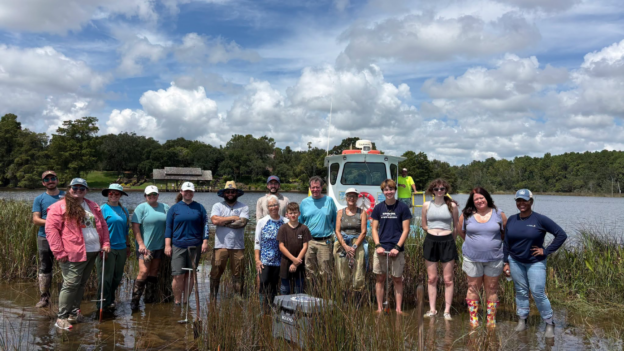
On Saturday, August 29th, the Bellingrath riverfront was bustling as volunteers planted marsh grasses on Bellingrath Spit. The workday was organized by our partners at the Mobile Bay National Estuary Program. It will stabilize the newly rebuilt spit, preserving the Fowl River ecosystem for the next twenty years.

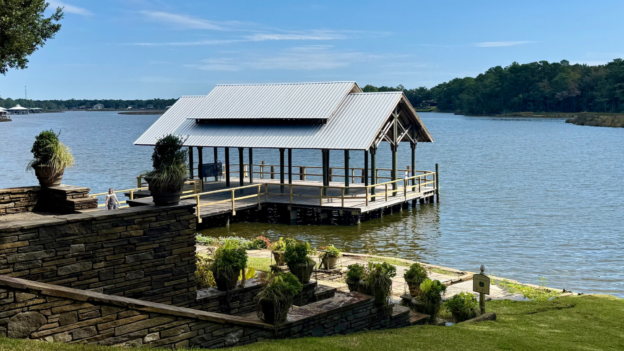
A boat, the Ms. Ruth, docked at the River Pavilion and ferried the planting team to and from the spit. That was possible because of your generous donations this spring. Your gifts paid for repairs to years of damage to the River Pavilion, including damage from Tropical Storm Bertha’s high water in July. We’ve also used the funds to install handrails to enhance safety for our guests, particularly school groups that visit the real-time water monitoring station at the dock. This week we’ll replace the badly damaged shake roof with a metal roof, which will vastly improve the appearance of our front porch on the Fowl River.

Your generosity has helped us to reactivate the riverfront. We’re grateful for your gifts and for the many opportunities the Pavilion offers us to enjoy the river’s natural beauty, learn about the local ecosystem, and help protect it.

Commemorative Bricks Installed this Spring

Two dozen donors have purchased commemorative bricks in honor of or in memory of a loved one, or to reflect their own love for the Gardens. It’s a beautiful way to leave a lasting legacy at Bellingrath. The funds received have helped to fund the first wave of design for our Centennial Master Plan.

This coming spring, we’re looking forward to installing these bricks in the Keyhole Garden behind the recently restored Summer House. Best known as the home of the polar bears during Magic Christmas in Lights, the Keyhole Garden needed restoration of its own. It will be the focus of our year-end giving campaign. We’ll preserve the garden’s historic shape while elevating its appearance with elegant new stonework.

Our first set of commemorative bricks will edge the path, reminding family and friends of memories in the Gardens. There’s still time to purchase a brick and be part of this beautifully restored garden. Go to this link for more information or to purchase.

Bellingrath Morse Foundation – Board Minute Highlights 1950-1952

The Bellingrath Morse Foundation had its very first meeting on February 1, 1950 with Walter Bellingrath serving as chairman and Turner Rice, an employee of the First National Bank’s Trust Department acting as secretary. There were three other members serving that day:

  • Walter K. Smith, Vice President of Mobile Coca-Cola Bottling Co. Mr. Smith was a founding partner in our accounting firm, Smith Dukes.
  • William C. Dorgan (married to Bessie Bellingrath’s sister, Pearl), another Vice President of Coca-Cola and General Sales Manager, and
  • C. Ernest Edgar, Jr., Mrs. Bellingrath’s nephew and Secretary-Treasurer for Mobile’s Coca-Cola Bottling Co.

The board makeup would change over the years leading up to Mr. Bellingrath’s death, but here are some interesting events and some items discussed over the first two years of the board’s existence as Mr. Bell formed his ideas for the future operations of Bellingrath Gardens and Home:

1950:

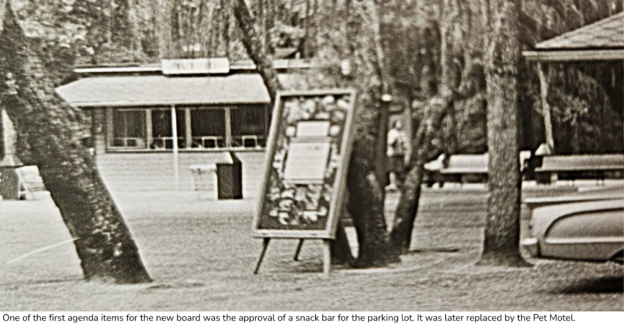
  • Feb. 1, Snack Bar opened.

1952:

  • April, a heavy hailstorm broke over 200 panes of glass in the Conservatory/Palm House. August 5, Monolith dedicated.
  • November 25, voted that the admission price for the Bellingrath Home would always exceed the price of general admission by “25% or more.”
  • Walter Bellingrath transferred and delivered the principal part of the furnishings of the Home as well as “fixtures and embellishments” to the Foundation. And he stated: “The care in proper order of these articles requires constant attention which must be performed by someone having intimate knowledge of their value, arrangement and care to preserve said articles, many of which are irreplaceable.”
  • Voted that no one will be allowed to live in the Home or have use of items from the Bessie Morse Bellingrath Collection.
  • Voted to allow for the Guest House to be converted, if needed, to a residence for Gardens manager with a portion of the garage enclosed for a kitchen and dining room. This would reduce the space to allow for 4 rather than 6 vehicles.
  • Voted to never allow the Chapel to be used for residential or refreshment purposes.
  • Walter Bellingrath announced, “I have no objection if the Lodge is torn down if it is then landscaped and used as part of the Gardens proper.”
  • Approved the installation of a new hot water boiler for the Bellingrath Home. Old one was leaking.
  • U. S. Highway 90 has been four laned.

Next up: 1953-the months following Walter Bellingrath’s death in 1955.

A Birthday Salute

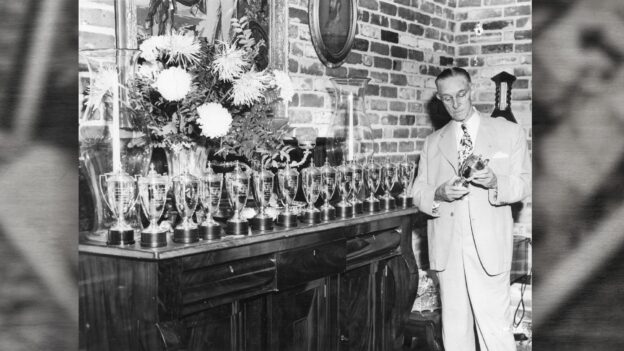
In 1949 invitations were sent for an 80th birthday party for Walter Bellingrath. A makeshift stage of bamboo held Mr. Bellingrath and some family members backing up to the Home while nearly 500 seated guests filled the driveway area in front of what today is the Delchamps Gallery. 

To the guests’ amusement, his young nephew and namesake, Walter Bellingrath Edgar appeared costumed like the Sprite Boy. That character had been created in 1942 by illustrator Howard Sundblom who had earlier drawn the familiar Santa Claus image. The Sprite Boy led to the official adoption of “Coke” alongside Coca-Cola. 

Walter was pulling his red wagon and in the bed of that wagon was another surprise for his 80 year old uncle: 16 engraved sterling silver loving cups. Judge Ben Turner read a list of the donors while young Robert Edington read the actual inscriptions on each: 

1. The State of Alabama, James E. Folsom, Governor.

2. In Recognition of his Outstanding Service to Mobile County, Board of Revenue and Road Commissioners, Mobile County, Alabama 

3. In This Symbol We Express To You Our Appreciation of Your High Ideals of Civic Service, Board of Commissioners, City of Mobile 

4. Your Montgomery Kith and Kin Salute You, and Wish You Many Happy Returns of the Day on this, Your 80th Birthday. Mary, Elmore, Jean, Suzanne, and Stanhope. (Editor’s note: Walter Belllingrath’s sister-in-law Mary Elmore Bellingrath (1876-1955), daughters, Elmore Bartlett (1911-1992), Jean Lane (1916-1994) and Suzanne von Gal (1920-1991). Stanhope was a brother of Mary Bellingrath and was Secretary-Treasurer of Montgomery Coca-Cola Bottling Co.) 

5. With Love and Appreciation for your Accomplishments as a Bottler of Coca-Cola, Floriculturist, and Christian Benefactor. Coca-Cola Bottling Company of Arkansas, by: Mrs. T. L. Bellingrath and Family: Carl, Edward, Ruth, Maude and Elsie. (Editor’s note: Mrs. T. L. Bellingrath was Walter Bellingrath’s sister-in-law, Maude (1890-1954), widow of his brother Theodore Leon (1864-1919). Her children were Carl (1896-1953), Edward (1908-1949), Ruth Hall(1901-1992), Maude Silverman (1904-1982) and the youngest, Elsie Stebbins (1913-2011). 

6. Coca-Cola Bottling Company of Selma (Owned by his sister Kate) 

7. Associates and Employees of the Coca-Cola Bottling Company, Mobile, Alabama. 

8. Executives and Employees of Bellingrath Gardens. 

9. Officers and Employees of Coca-Cola Bottling Co. of Frisco City (owned by W. D. Bellingrath) 

10. Employees of Coca-Cola Bottling Co. of Biloxi (Also owned by W. D. Bellingrath) 

11. Harry Crawford & Associates (Advertising agency with offices in Mobile and Montgomery) 

12. Mobile Press-Register (Mr. Bellingrath worked to establish the Mobile Press in 1929. It later absorbed the older Mobile Register.) 

13. Radio Station WABB (established by the Mobile Press-Register on June 19, 1948 and owned by the newspaper until 1959.) 

14. I. B. Tigrett, President of the Gulf, Mobile and Ohio Railroad. Isaac Burton Tigrett (1879-1954) oversaw the merger of the Gulf, Mobile and Northern Railroad with the Mobile and Ohio Railroad in 1940 to create the G. M. & O which he presided over until 1952. Mr. Tigrett’s great nephew and namesake founded the Hard Rock Café chain. 

15. Lerio Corporation, originally founded as the Lerio Patent Cup Co. in 1914 by Louis J. Lerio who successfully patented several types of equipment used in the collection of turpentine. Mr. Bellingrath was an investor in the firm and became its president after Mr. Lerio’s death in 1942. 

16. The First National Bank. Walter Bellingrath was a director of the bank for many years and it handled the trust he created. 

A Special Certificate 

The loving cups are on display on the Riverside Dining Porch with another gift presented to Mr. Bell in 1949: a special hand colored certificate from the Liquid Carbonic Corporation which had invented a low pressure method of filling glass bottles with carbonated beverages. The new method reduced the chances of bottles exploding under pressure. Walter Bellingrath purchased the very first system and they sought to honor him for that long relationship. The company is still in existence today as a branch of Praxair. We are grateful for the Mobile Coca-Cola Company for donating this certificate back to Bellingrath Gardens and Home.  

Leaving Your Own Bellingrath Legacy

Steve Crawford spent decades serving as a Board Member and Board Chair of the Bellingrath-Morse Foundation. Out of his love for the Gardens and Home, he included a $25,000 gift in his will. That donation played an important role in the recent restoration of the Summer House and will be honored in a ceremony this fall.

As an attorney, Mr. Crawford understood that he could make a significant gift at the end of his life. It’s fitting that the contribution supported the first project of our Centennial Master Plan. Restoring one of the original structures from the Gardens reminds us that each generation plays a part in preserving the Bellingrath legacy.

Like Steve Crawford, you can make one of your largest gifts through your estate plans. You’ll be able to meet your family’s financial needs while showing your love of the Gardens, the region’s history, STEM education, art, nature, and lifelong learning. We have many opportunities for you to make a lasting impact for generations to come!

The simplest way to make a planned gift is to include a bequest in your will. Still, there are a variety of options, including naming Bellingrath as a beneficiary of a life insurance policy or investment account. Your financial advisor can provide more information.

To discuss a possible planned gift to Bellingrath, please get in touch with Cory Sparks, Ph.D., at [email protected] or (251) 873-1378.

Walter D. Bellingrath: A Visionary Civic Leader

On August 8, we will celebrate Mr. Bellingrath’s birthday. Born in Atlanta in 1869, 157 years ago, his mark and legacy lives on with Bellingrath Gardens & Home, the estate garden that he and his beloved wife, Bessie Morse Bellingrath, created in the first half of the 20th Century. Bellingrath’s own Tom McGehee has written aplenty about Mr. Bellingrath, and I will not attempt to weave a tale as good as Tom could in describing our founder. However, I would like to add some context as to what has been created and why it is so important.

Walter D. Bellingrath is not only our founder, but, of course, he was a Mobile icon – a successful businessman, a community pillar, and an inspirational figure and mentor to so many of his contemporaries. I’ve often said that he was a marketing genius both of his time and ahead of his time. He also was bold in his pursuits, a man who understood the principles of risk (both good and bad), and because of these traits, he was able to excel.

In 1949, Mr. Bellingrath set up the Bellingrath-Morse Foundation, a legal instrument meant to perpetuate the gardens that Bessie Bellingrath had started. In this extraordinary act of generosity in establishing the Foundation so that Bellingrath Gardens would live on past his death, Mr. Bellingrath set in motion something that rarely happens – the creation of something that can give back to its community, through its continuance, for inspiration, mental and spiritual fulfillment, pleasure, and civic-mindedness. That Bellingrath Gardens & Home provides these things, and more, to our visitors, members, and patrons, is a given. But, today’s BGH would not exist were it not for Mr. Bellingrath’s generosity and forward thinking in 1949. And, therefore, in this regard, Walter D. Bellingrath stands among a select group of people who have changed the course of American horticulture, public garden, and historic estate home genres, each in their own cities.

Viewed through this lens, then, here are three peers of Mr. Bellingrath. Please think of these fellow garden/estate founders as being pioneers, just as with Mr. Bellingrath, for their own communities.

1. Henry Shaw of St. Louis, Missouri – Mr. Shaw, who lived well before Walter Bellingrath’s time, was a profitable businessman and community figure in the first half of the 1800s. After visiting prominent English and European gardens through the 1840s, just as with the Bellingraths six decades later, Shaw was inspired to build a country estate and gardens. By 1859, these gardens opened to the public and would later become known as the world-famous Missouri Botanical Garden.

2. Alfred B. Maclay of Tallahassee, Florida – Mr. Maclay, born only two years after Walter Bellingrath, was a successful New York financier and banker. Through visits to Leon County, Florida, where his wife Louise had visited family on many occasions, he fell in love with the area’s trees – oaks, dogwoods, hollies, and pines. This culminated in his creation of a flower garden filled with camellias and azaleas, among other plants. After he died in 1944, Louise and their children donated the gardens to Florida to serve as a memorial to Mr. Maclay and his floral legacy. Today, these are named the Alfred B. Maclay Gardens State Park.

3. Harry P. Leu of Orlando, Florida – Mr. Leu, born 15 years after Mr. Bellingrath, was also a successful businessman and a civic leader in his community. By 1936, he and his wife Mary Jane had purchased property that contained a 1920’s era collection of camellias. By the 1940s, the Leus traveled the world, often returning with new ornamental plants, and especially camellias, to develop their garden. In 1961, they gifted the gardens to the City of Orlando. Today, this is the Harry P. Leu Gardens.

Through this telling of our founder’s significance, and through you reading about other “Walter Bellingraths” of their respective communities, it is my hope that you will never forget the gift of Bellingrath Gardens & Home. Walter D. Bellingrath, through his giving and philanthropy, set up this historic estate garden as a permanent feature of the Mobile community, and also of the greater Gulf Coast region, for generations beyond his time and even beyond ours.


Alabama’s Wild Carnivorous Plants

Most locals of a certain age in Lower Alabama remember the days when the fields you’d see driving through the country were covered in dense prairies of native wildflowers, or were still open, grassy savannas dotted heavily with towering longleaf pine trees. Even the drainage ditches down the sides of the dirt roads were full to the brim with a color, shape, and texture we can hardly imagine today. What most people don’t know is what some of those wild plants were, and the answer might surprise you: Alabama is not only home to over 30 species of native carnivorous plants, but also boasts the honor of being the center of diversity for the iconic showy pitcher plants in the genus Sarracenia.

Our pitcher plants are truly marvels. They’ve evolved over millions of years to exploit the relative scarcity of competition in some of Alabama’s harshest environments, from permanently wet, acidic bogs, open to the blazing sun, to bald granite outcroppings hidden in dense forests, with hardly any soil at all. Their survival strategy is to seek their nutrition elsewhere, since so little exists in the soil, and so they’ve become hunters. Pitcher plants have developed some of the most remarkably sophisticated, colorful, and wonderfully patterned leaves of any native plant, complete with an offering of sweet nectar, all for the purpose of attracting, trapping, and eventually digesting their insect prey. The nectar of some species of Sarracenia even contains the drug coniine, which dulls the senses and even partially paralyzes unlucky bugs, making it easier for a fatal slip and tumble into the trap below. If that wasn’t extreme enough, pitcher plants are also fire-dependent, relying on the cleansing force of natural lightning-strike wildfires to keep the longleaf pine understory open and sunny.

Besides the charismatic Sarracenia, Alabama is also home to four species of Drosera, the sundews, which entice unfortunate insects to a sticky end with leaves covered in glistening drops of sparkling dew. Once the unfortunate bug is stuck, the leaves curl around it, globbing more inescapable goo onto the bug and using that same sticky substance to break down the soft parts of the insect and digest it alive. It’s incredible and a little scary to think that something so beautiful could be so deadly!

Another genus of plants which employ sticky traps are the Pinguicula, or butterworts, so-called for the greasy mucilage that coats their otherwise inviting leaves. These small plants hug the ground in quaint rosettes, sending up charming yellow, bluish, or pink flowers and seeming altogether very well-behaved. If you’re a small insect however, those shimmering sunny leaves can spell doom: like the sundews, their sparkling leaves appear to be covered in nectar, but once the bug is stuck, they pool with so much digestive fluid that the edges curl up to contain it all.

Another genus of native Alabaman carnivorous plants, the Utricularia, or bladderworts, have an even more specialized trap. Often found floating listlessly in stagnant, swampy pools and looking like nothing so much as strands of green algae, bladderworts actually possess the fastest moving parts in the entire plant kingdom. Their finely-tuned suction traps, shaped like a balloon or pouch and sporting a trapdoor kept on a hair trigger under extreme pressure, can deploy within 5.2 milliseconds. That’s twenty-eight times faster than a human can blink, meaning that any hapless aquatic prey, like mosquito larvae, that happen to brush up against the trigger hairs are instantly trapped inside. The door to the trap swings shut and the plant begins pumping water out of the trap and filling it with digestive fluid. Utricularia are tiny, nearly invisible killers. You might only notice them if you stop to admire their colorful orchid-like flowers, swaying delicately in the breeze over still water.

It’s bizarre to think that somewhere like Alabama might harbor a whole host of plants that can be simultaneously so lovely and so dangerous (if you’re a bug – luckily, none of our native carnivorous plants are dangerous to humans!). These mysterious and marvelous plants used to make up a significant portion of our landscape. Much of what is now sod, cotton, corn, or housing developments used to be endless stretches of wild beauty: fields of white-topped pitcher plants, sprinkled with sundews, native orchids, blazing star, and countless other breathtaking native plants. Some refuges of our irreplaceable natural heritage remain, but please visit them with respect and care. Without our protection, our own native Alabaman carnivorous plants, known from nowhere else in the entire world, will disappear forever.

Gulf Coast Chinese Lantern Festival Round 2

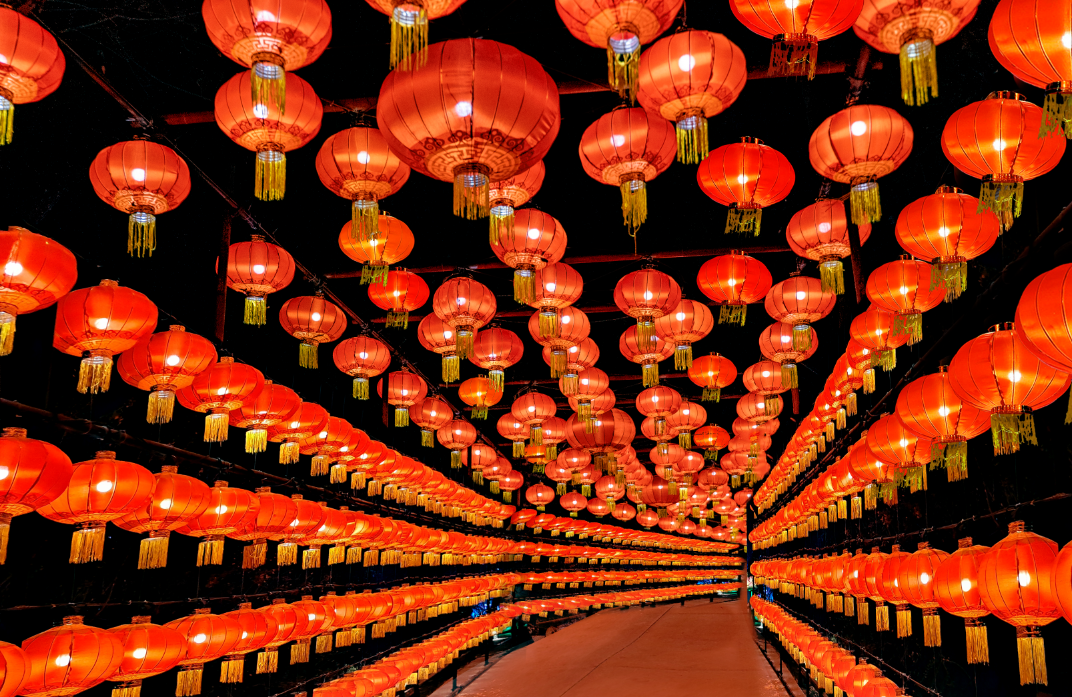
Hello, everyone! I hope that you are enjoying your summer break now that school is out. Here at Bellingrath, we’re happy to have our second year of the Gulf Coast Chinese Lantern Festival finished. Phew! It’s been a good run, but as I’m sure so many of you also feel, the days and weeks and months just seem to pass ever faster and faster, eh?

So, you ask, how did we do this year? Was the event successful? Are we going to do it again in 2027? To these questions, I can say “pretty good” and “yes” and yes!” Our attendance numbers for 2026, compared with the inaugural 2025 year, were down, but we feel that economic and cost-of-living issues are pinching people’s wallets and budget – and we at BGH understand this, too. Despite, however, us having fewer attendees, the reviews (both online and on-site) were nothing short of amazing and praiseworthy for this year’s show. Our partner, Tianyu Arts & Culture, put together an entirely new show for this year, and to my great excitement, they created several signature set pieces based on concepts that I had given them back in 2025 (for which there wasn’t enough time to realize). Thus, we had flowering dogwoods, pitcher plants (complete with bats bobbing in and out of the pitchers, lol), native azaleas, and also our familiar Formosan azaleas. These set pieces were crafted specifically for the Bellingrath show, and we couldn’t be more pleased! We hope you noticed these “local flora” nods when you visited.

Although our attentions are now starting to turn to this year’s Magic Christmas in Lights, we will soon (by late summer) be working on next year’s Gulf Coast Chinese Lantern Festival, believe it or not. If you have any thoughts on specific new set pieces that you would like to see next year, please send us your ideas. You never know what we’ll decide to adopt!

The reasoning behind us hosting a second light show at BGH – with Magic Christmas being the first one, of course – were two-fold: to provide more opportunities for you, our visitors and supporters, to experience our Charmed Spot of the Deep South at a different time of the year, and also to provide crucial operating support that allows us to fulfill our mission and keep the doors open. Public gardens are resource intensive organizations to operate, and given today’s visitor expectations, we know that we can never rest on our laurels “waiting” on you all to just show up. As staff will affirm, I often say that we always need to give visitors at least two reasons to come to BGH. Although I feel that the gardens and home are reason enough, I also know from my career experiences and from my colleagues’ perspectives that our own splendid campus isn’t enough. We need to give you another reason to come – something so compelling that you just can’t wait to see what we have offer. Both Magic Christmas in Lights and the Gulf Coast Chinese Lantern Festival offer this “second reason” level of attractiveness and attention.

In our view, Bellingrath remains as vital today as it was in Mr. Bellingrath’s time, for the societal and spiritual benefits that it brings forth. Public gardens and historic estates aren’t just “pretty places,” ya’ll. They are essential components of the social fabric and regional identity of the communities in which they are located. Although we can never rest fully on past successes, we can celebrate them while also looking forward to the next set of reasons that we are giving you to continue supporting us. Thank you for all you do for Bellingrath Gardens & Home. We cannot exist without you!


Four Campaigns for Our Future

Since we relaunched the Friends of Bellingrath newsletter with a new look in the fall of 2024, each issue has featured a different fundraising campaign. We’ve used an integrated digital fundraising approach, inviting gifts through the newsletter, emails, Facebook posts, donation stations in the Gardens, and prompts at the time of ticket purchase.

We’re grateful for the progress these contributions have fueled in the Gardens. Here’s a quick recap of eighteen months of investment by Friends of Bellingrath and other supporters.

Pathway to World Class Camellias and Azaleas (Fall 2024)

This campaign provided funding to add 750 varieties of azaleas and 500 varieties of camellias to our newly designated core collections (joining our tree canopy and native plants). It also covered the cost of creating a database of our collection. As a result of this work, we’ve become more active in the American Azalea Society and the American Camellia Society. The American Camellia Society recently named Bellingrath the legacy lead for preserving and protecting the Back Acres hybrid group, which our team collected from Pass Christian, Mississippi. The American Camellia Society named Bellingrath a pre-conference site for the 2027 International Camellia Congress.

Summer House Renovation (Spring 2025)

Major gifts from the Hearin-Chandler Foundation, the A.S. Mitchell Foundation, and the Estate of Stephen Crawford covered the majority of the renovation expenses, but our spring campaign in 2025 aimed to cover the remaining costs. The new copper roof and open ceiling bring an air of quiet elegance. Repairs will be completed over the summer, and we expect a dedication this fall.

Head House Renovation (Fall 2025)

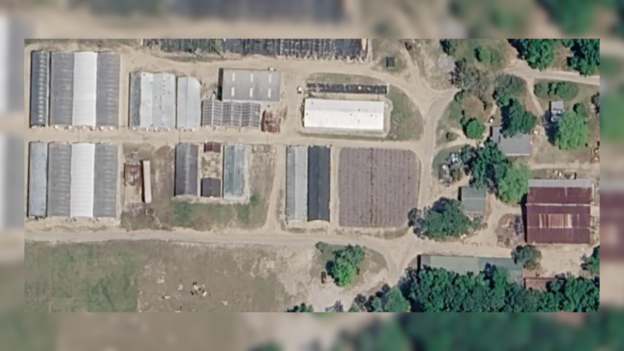
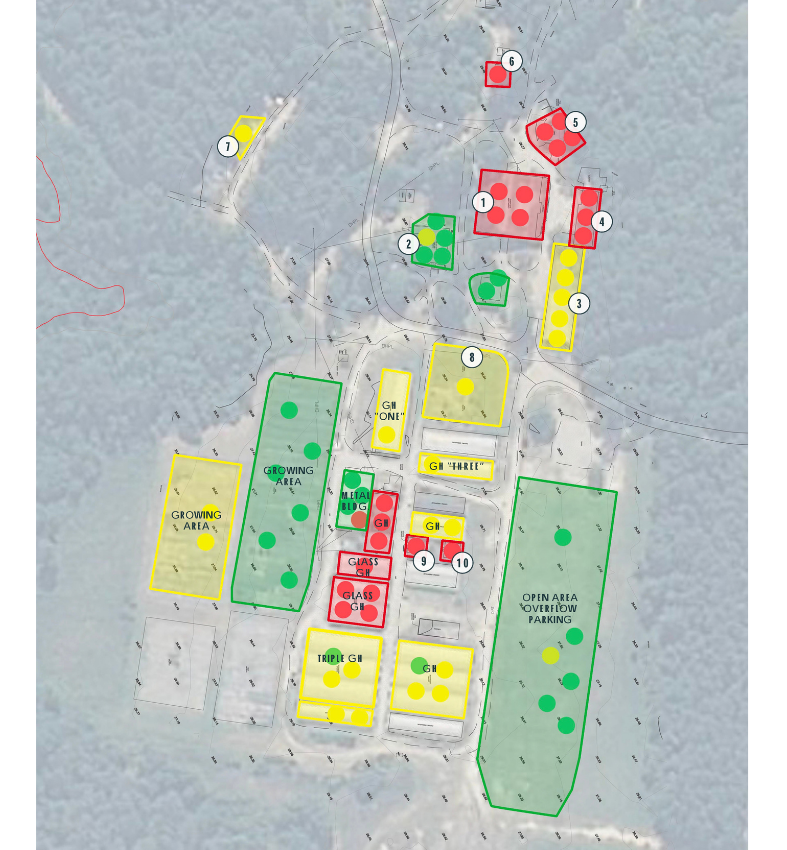
Our fall 2025 campaign raised money to repair the insulation in the Head House, the main office in our Greenhouse complex. We’ve begun work on the insulation project and other winterization in the current greenhouse complex. With foundation support through our Laying the Groundwork for the Centennial Master Plan campaign, we’re beginning design in July on a new greenhouse and maintenance complex that will meet our needs into the next century.

River Pavilion Restoration (Spring 2025)

Our current campaign is raising money to fix the River Pavilion, our front porch on the Fowl River. The river has been important throughout Bellingrath’s history. As part of our Centennial Master Plan, we will be placing increased attention on the waterfront, including along North Bayou. Our STEM program has already installed a real-time water monitoring station on the pavilion to record changing conditions in the tidal river. We’ve reached half of our $25,000 goal. As we’ve worked, we’ve recognized a need to make minor repairs now and plan for a redesign that will meet our needs into the next century.