 Purchase Tickets

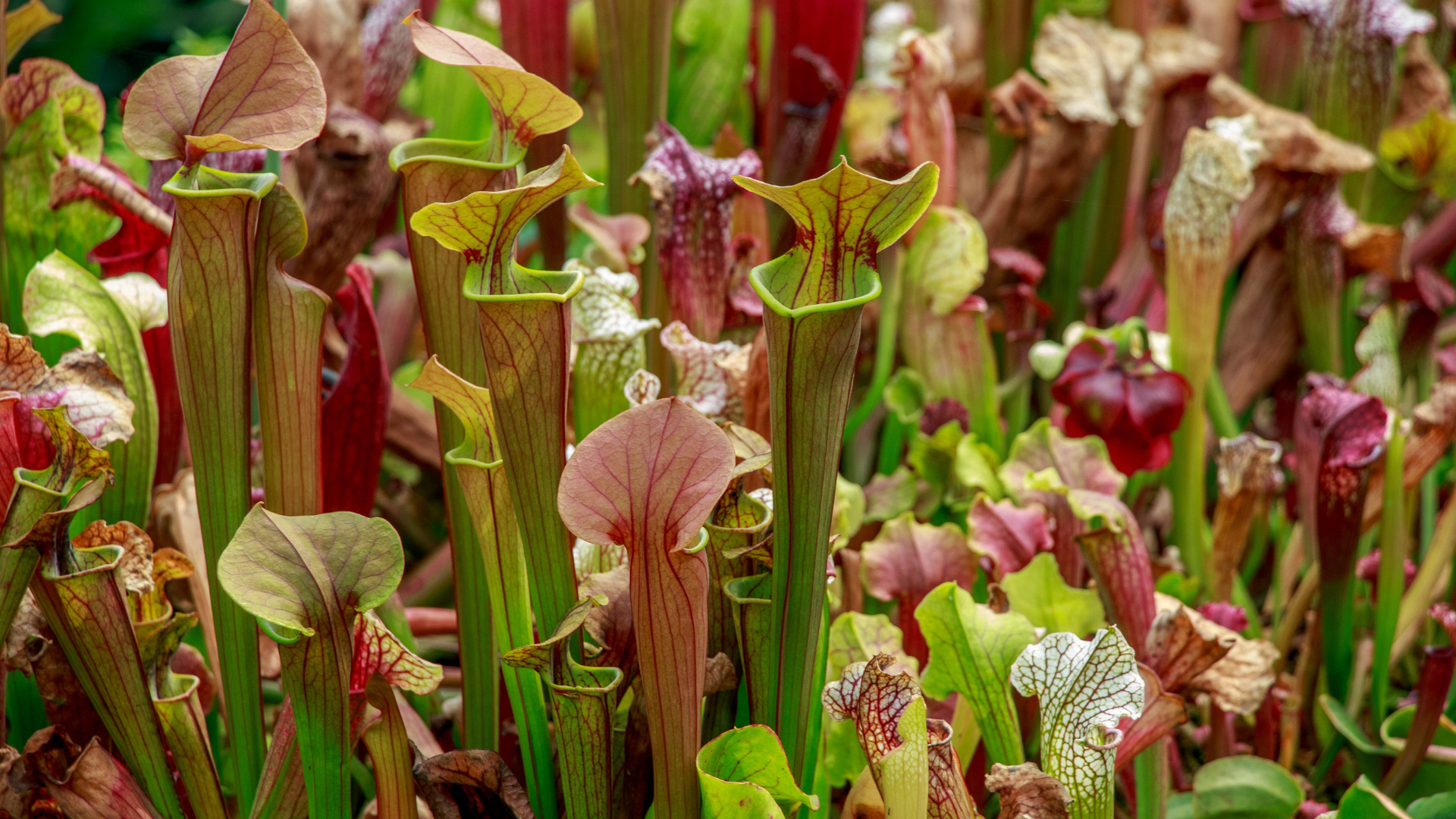
Most locals of a certain age in Lower Alabama remember the days when the fields you’d see driving through the country were covered in dense prairies of native wildflowers, or were still open, grassy savannas dotted heavily with towering longleaf pine trees. Even the drainage ditches down the sides of the dirt roads were full to the brim with a color, shape, and texture we can hardly imagine today. What most people don’t know is what some of those wild plants were, and the answer might surprise you: Alabama is not only home to over 30 species of native carnivorous plants, but also boasts the honor of being the center of diversity for the iconic showy pitcher plants in the genus Sarracenia.
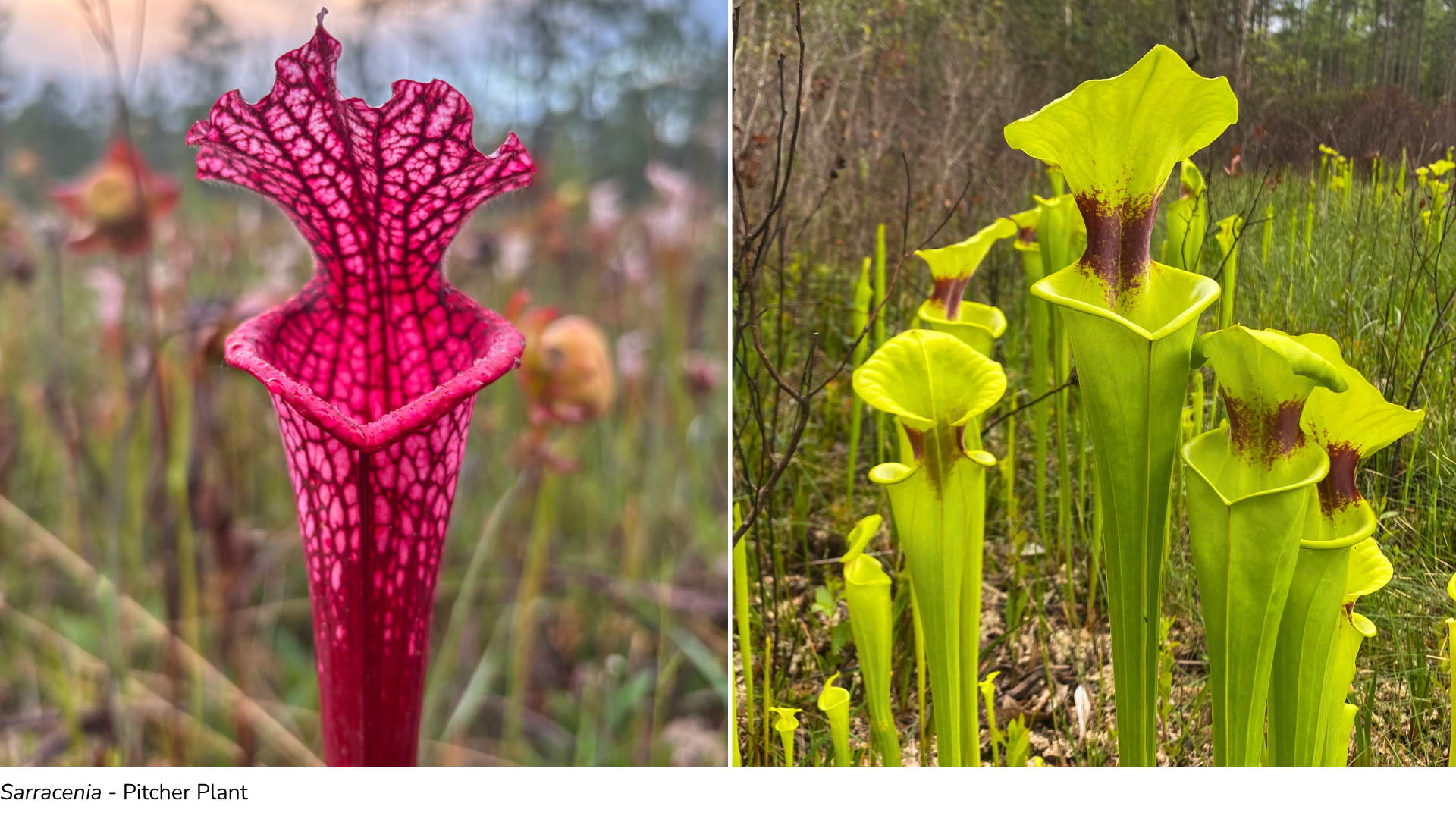
Our pitcher plants are truly marvels. They’ve evolved over millions of years to exploit the relative scarcity of competition in some of Alabama’s harshest environments, from permanently wet, acidic bogs, open to the blazing sun, to bald granite outcroppings hidden in dense forests, with hardly any soil at all. Their survival strategy is to seek their nutrition elsewhere, since so little exists in the soil, and so they’ve become hunters. Pitcher plants have developed some of the most remarkably sophisticated, colorful, and wonderfully patterned leaves of any native plant, complete with an offering of sweet nectar, all for the purpose of attracting, trapping, and eventually digesting their insect prey. The nectar of some species of Sarracenia even contains the drug coniine, which dulls the senses and even partially paralyzes unlucky bugs, making it easier for a fatal slip and tumble into the trap below. If that wasn’t extreme enough, pitcher plants are also fire-dependent, relying on the cleansing force of natural lightning-strike wildfires to keep the longleaf pine understory open and sunny.
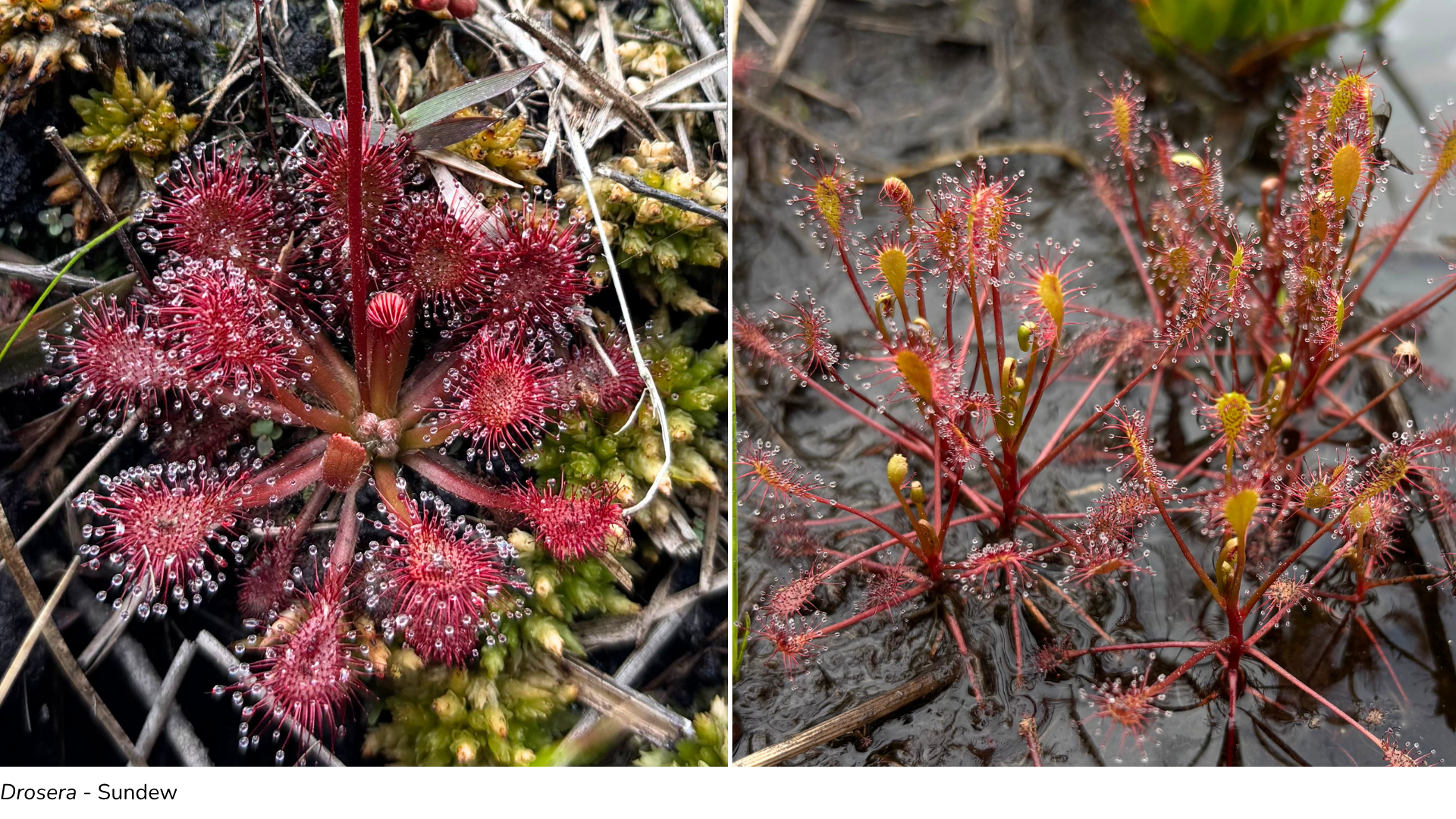
Besides the charismatic Sarracenia, Alabama is also home to four species of Drosera, the sundews, which entice unfortunate insects to a sticky end with leaves covered in glistening drops of sparkling dew. Once the unfortunate bug is stuck, the leaves curl around it, globbing more inescapable goo onto the bug and using that same sticky substance to break down the soft parts of the insect and digest it alive. It’s incredible and a little scary to think that something so beautiful could be so deadly!
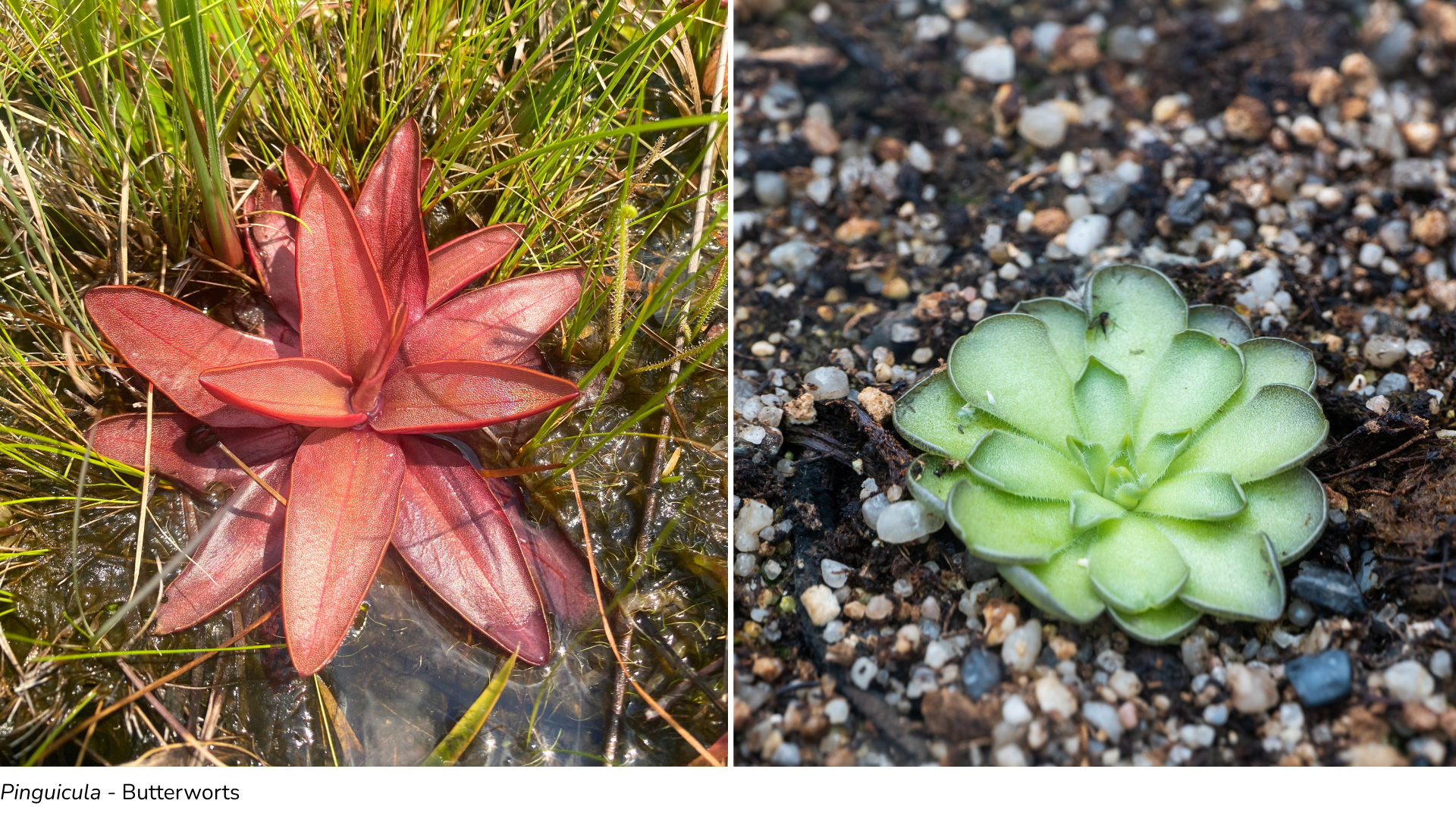
Another genus of plants which employ sticky traps are the Pinguicula, or butterworts, so-called for the greasy mucilage that coats their otherwise inviting leaves. These small plants hug the ground in quaint rosettes, sending up charming yellow, bluish, or pink flowers and seeming altogether very well-behaved. If you’re a small insect however, those shimmering sunny leaves can spell doom: like the sundews, their sparkling leaves appear to be covered in nectar, but once the bug is stuck, they pool with so much digestive fluid that the edges curl up to contain it all.
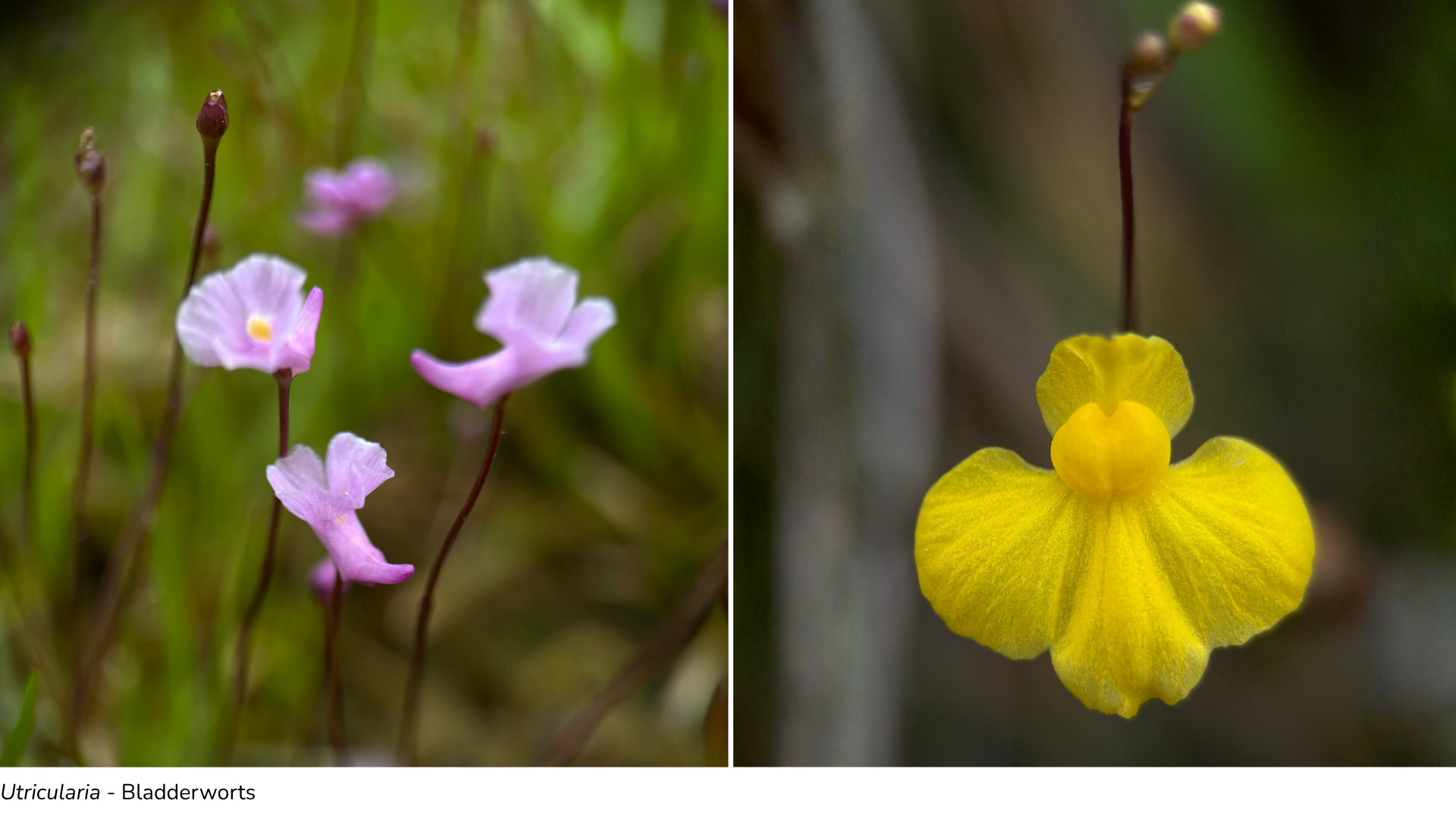
Another genus of native Alabaman carnivorous plants, the Utricularia, or bladderworts, have an even more specialized trap. Often found floating listlessly in stagnant, swampy pools and looking like nothing so much as strands of green algae, bladderworts actually possess the fastest moving parts in the entire plant kingdom. Their finely-tuned suction traps, shaped like a balloon or pouch and sporting a trapdoor kept on a hair trigger under extreme pressure, can deploy within 5.2 milliseconds. That’s twenty-eight times faster than a human can blink, meaning that any hapless aquatic prey, like mosquito larvae, that happen to brush up against the trigger hairs are instantly trapped inside. The door to the trap swings shut and the plant begins pumping water out of the trap and filling it with digestive fluid. Utricularia are tiny, nearly invisible killers. You might only notice them if you stop to admire their colorful orchid-like flowers, swaying delicately in the breeze over still water.
It’s bizarre to think that somewhere like Alabama might harbor a whole host of plants that can be simultaneously so lovely and so dangerous (if you’re a bug – luckily, none of our native carnivorous plants are dangerous to humans!). These mysterious and marvelous plants used to make up a significant portion of our landscape. Much of what is now sod, cotton, corn, or housing developments used to be endless stretches of wild beauty: fields of white-topped pitcher plants, sprinkled with sundews, native orchids, blazing star, and countless other breathtaking native plants. Some refuges of our irreplaceable natural heritage remain, but please visit them with respect and care. Without our protection, our own native Alabaman carnivorous plants, known from nowhere else in the entire world, will disappear forever.