Purchase Tickets


Walter Bellingrath first visited the Fowl River to fish. That led to his eventual purchase of the former Lisloy Club in 1918 and its conversion to Belle Camp.
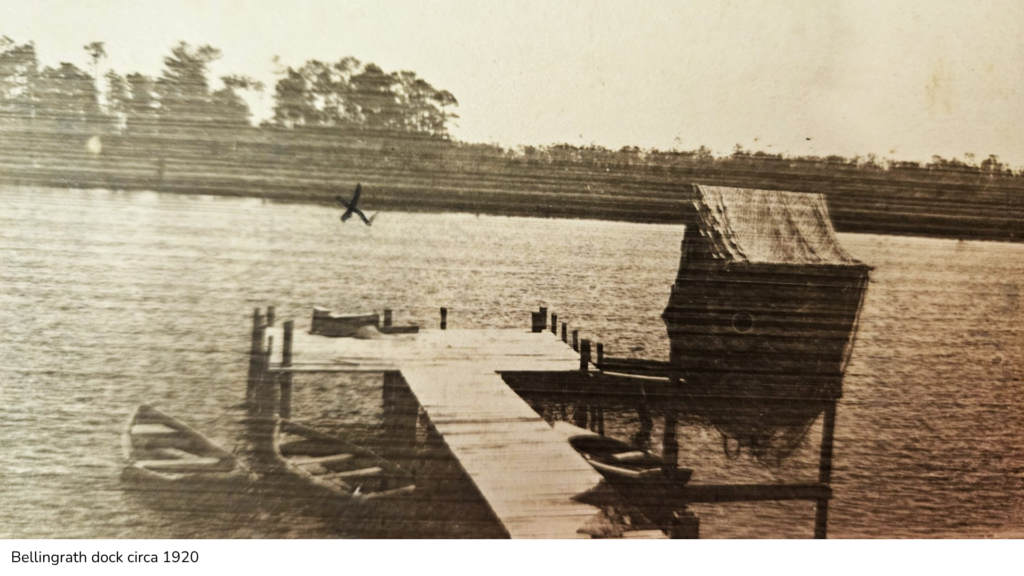
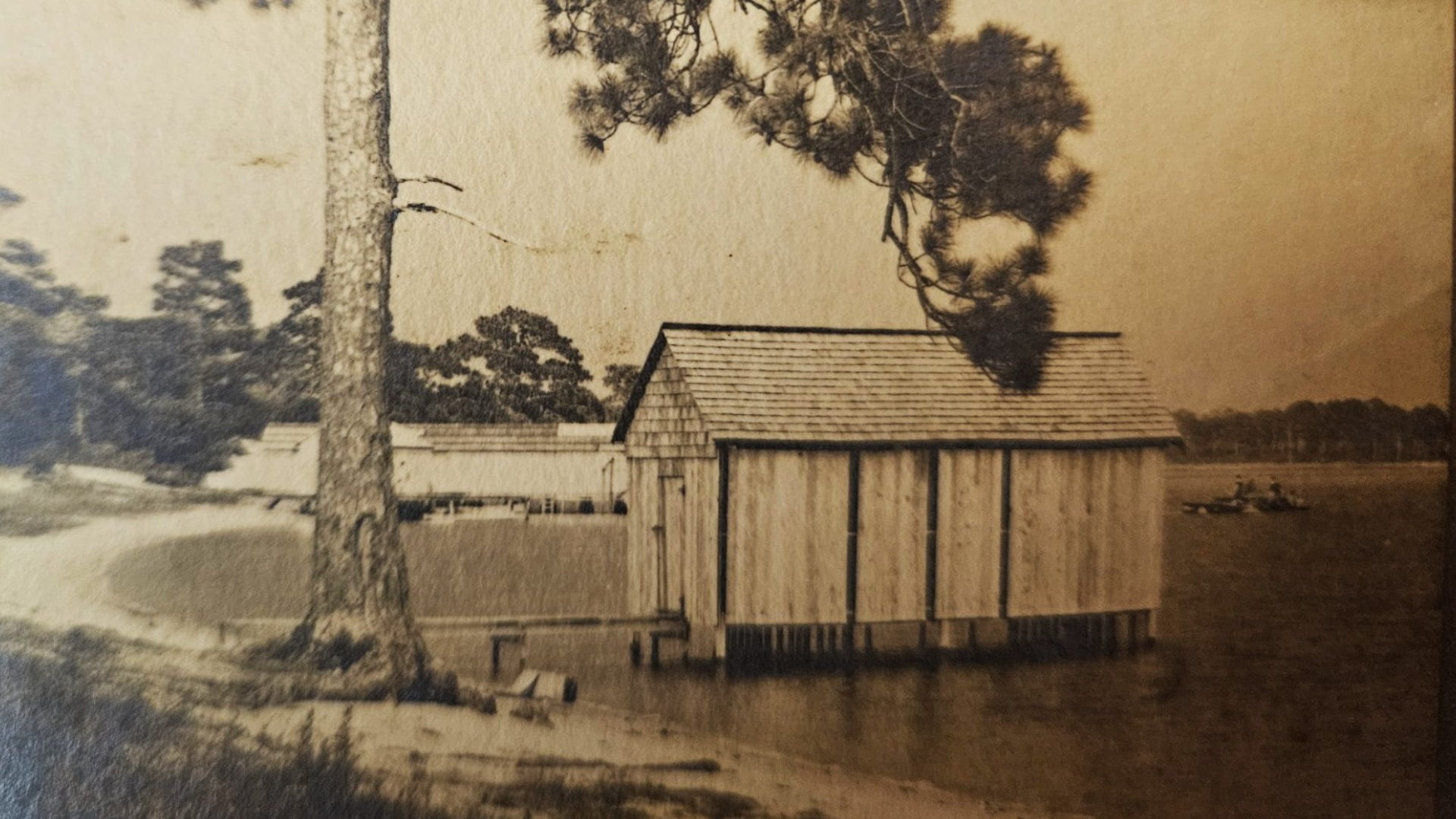
The earliest photo of his camp was taken from the water and shows his fishing guide, Frank Woodard, standing on a dock, no boat house in sight. However photos in the Bellingrath Archives indicates that there was a small one located further to the south.
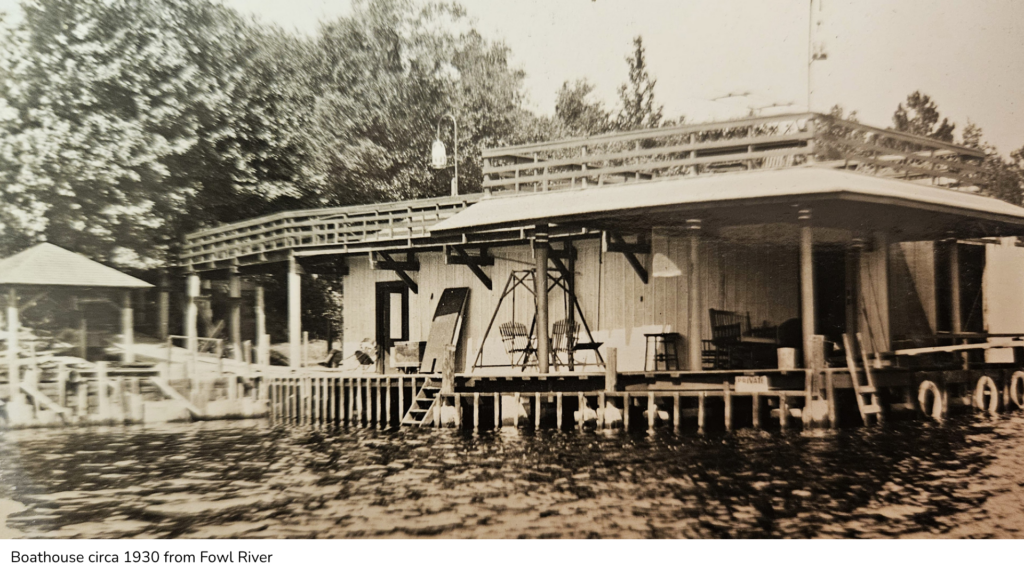
By the mid-twenties as the camp evolved, the modest wharf was replaced by a grand boat house to store Mr. Bellingrath’s growing numbers of skiffs, sailboats and a cabin cruiser he christened “The Bessie Belle.” Period images show that the structure had a sun deck sturdy enough to hold one of our large cast iron benches which match those in Mobile’s Bienville Square. The access to this deck was via a bridge walkway attached to an area where the East Terrace is today.
The lower level was a shady paradise with a glider, chairs and a swing to enjoy the views and breezes of the Fowl River. A ladder descended into the water for the convenience of swimmers. The western end of the building had four changing rooms which family members recall had no lights except from a transom.
Once the Bellingrath Home was built the bridge access was removed and replaced by a wooden staircase with landings to make the climb more present. It was during this time period that nieces and nephews of the Bellingraths were able to invite their classmates down for swimming and boating.
One of those classmates recalled that Mrs. Bellingrath always insisted that her maiden sister Emmie Morse serve as a chaperone. When her nephew, H.C. Robertson was asked by his date to rub sun tan lotion on her back Miss Morse sailed over the crowd crying “No touching, no touching, here, I will do that!”
The boat house survived well past Mr. Bellingrath’s death in 1955 and that upper deck was enjoyed by countless tourists over the years. However by the late 1970’s borers has severely undermined the pilings supporting the structure and since there were no longer any boats to be sheltered the entire structure was replaced with an open pavilion.