 Purchase Tickets

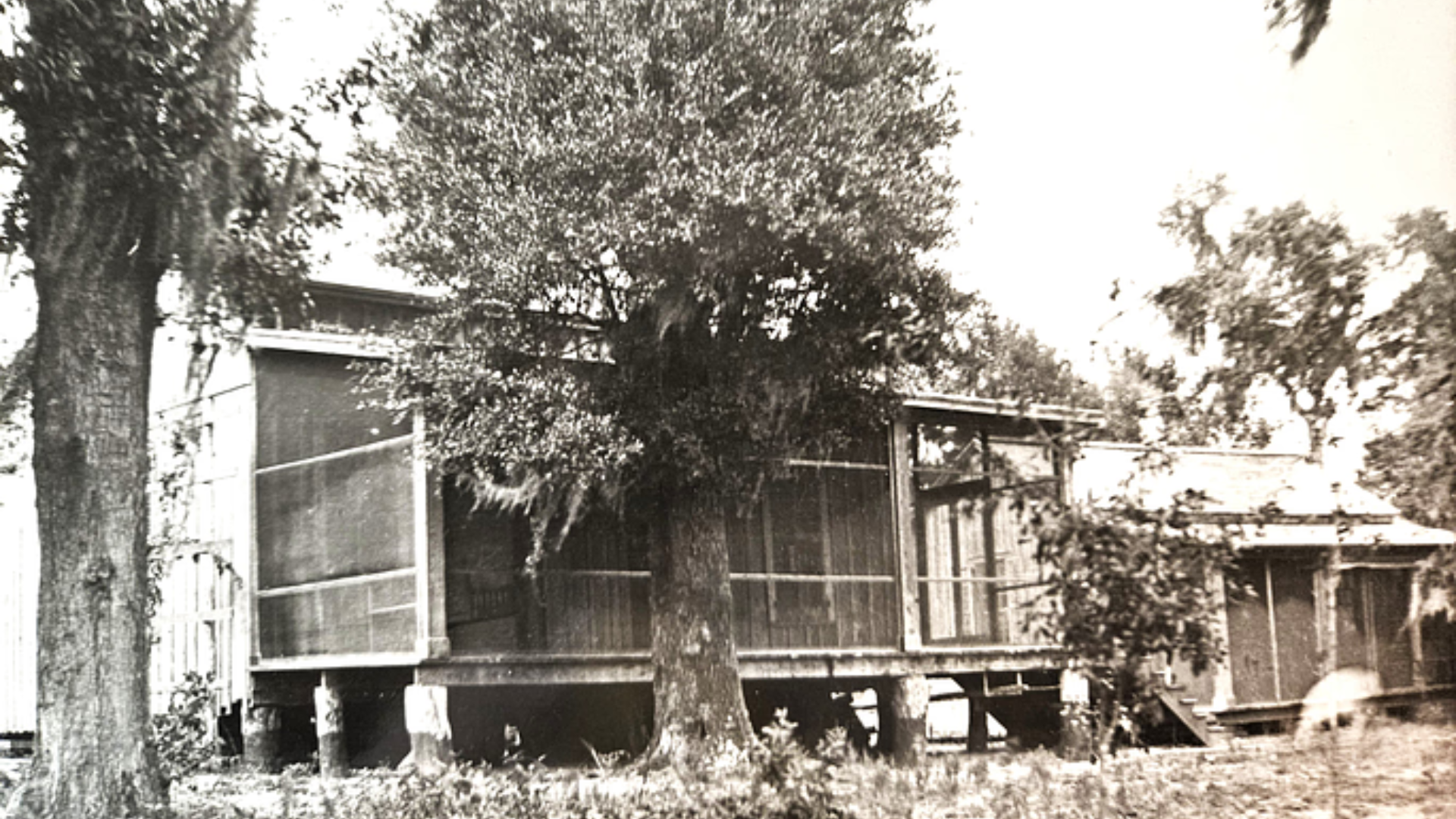
The Bellingraths were very aware that the land holding their fishing camp, and later garden estate, had a long history stretching back to French colonial days. When Walter Bellingrath purchased the original two cabins, a group of Mobilians had been enjoying them as the Lisloy Club, named for the French plantation which once occupied the property in the 1760’s.
It is unclear if the Bellingraths knew much about the owner of that plantation and it was not until the Spring of 2002 that a group of archaeologists from the University of South Alabama began a dig which turned up clues and confirmed its existence.
Research conducted at that time identified the original owner as Henri Montault de Monberaut,de Saint-Civier (1718-1786) a French nobleman and important military officer. He had previously commanded Fort Toulouse which stood at the junction of the Coosa and Tallapoosa rivers near present day Wetumpka. Established in 1717, this was the easternmost outpost of French territory and served as an important trading center.
Having mastered several languages, Henri also learned a great deal about the cultural practices of the Creek Indians. This led to his reputation as an expert negotiator.
A Move to Mobile
Henri had moved to the Mobile area by 1759 and he and his family occupied a house in town before establishing a plantation on the bluff overlooking the Fowl River. He called his plantation Lisloy and the property eventually held a manor house, well-filled barns, stables, a dairy and a good garden enclosed by rail fences.
The swampy lands surrounding this proved unsuitable for farming so the land was used for cattle farming and a tar works. In 1762 Henri had resigned from the army and the following years his diary indicated his property held 500 cattle, 50 horses, flocks of sheep and pigs. That was also the year which ended the French rule of this area when the Louisiana territory was ceded to Great Britain and Spain.
While many French residents moved west, Henri stayed behind and was named Deputy Superintendent of Indian Affairs in what became British West Florida. His expertise led to treaties creating boundaries with the Choctaws and Creeks. Ultimately Henri’s relationship with the British deteriorated and in 1769 he and his family returned to France. Louis XVI granted him a pension and it is believed that he died in 1786.
After the family’s departure, the once thriving plantation was abandoned. A British map of 1775 shows its location describing it as “deserted.”
2002 Findings
The dig completed in 2002 found colonial era artifacts which could be traced to Henri’s occupancy. Among the treasures uncovered were:
- Tin-glazed French faience (earthenware)
- British creamware (lead-glazed pottery with a creamy color)
- Green bottle glass
- Fragments of white clay smoking pipes
- And most importantly, a brass French military button.
Some of these items have been on display at the USA Archaeology Museum on campus. And now, nearly a quarter of a century later another dig is underway on the site of the Lisloy plantation. It will be interesting to see what is unearthed this time around.
The Archaeology Museum on the University of South Alabama campus has free admission and is open Tuesday-Friday from 10AM to 5PM during the school year and will reopen on Friday, August 14, 2026.