Category Archives: Bellingrath Blog

old photo of men with truck

A Forgotten Floral Genius

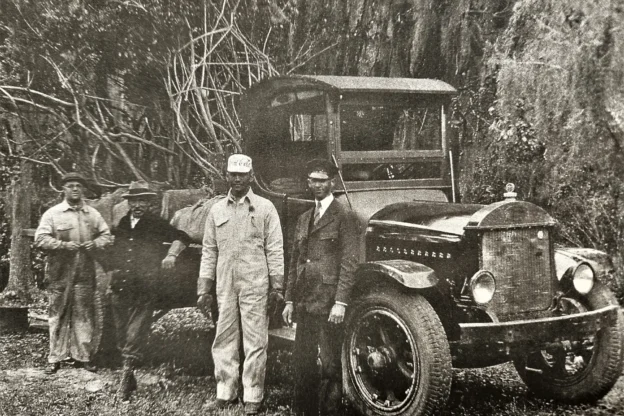
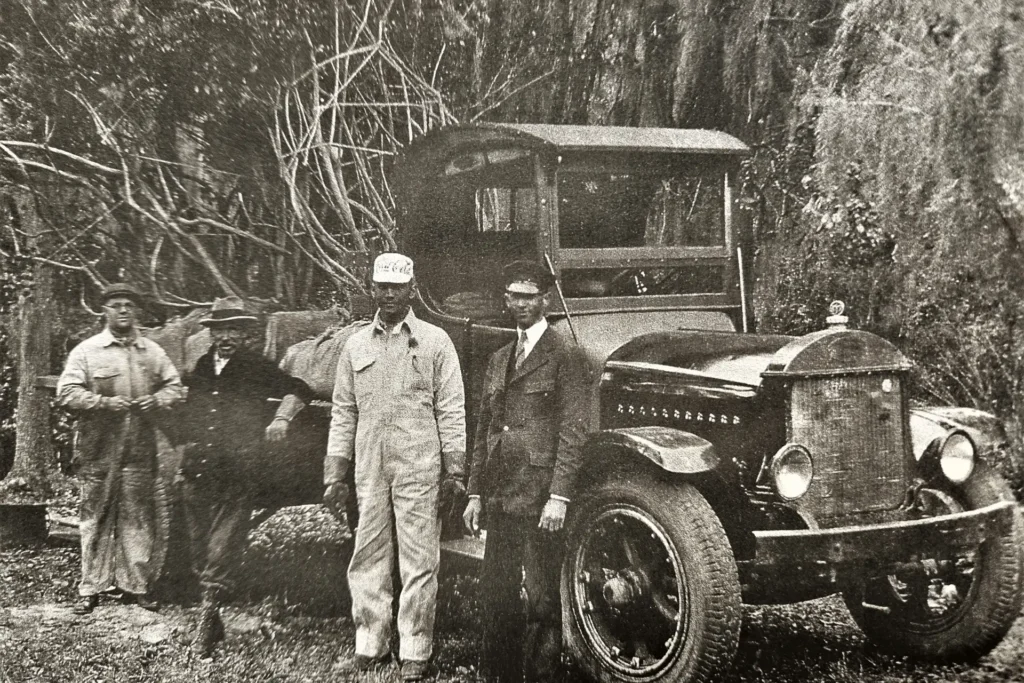
Louis Thublin perfected the transport of huge azaleas and camellias to what would become Bellingrath Gardens. Here he stands in front of a truck loaded with camellias between Coca-Cola employees John Bender and Will Covington with the Belliingraths’ chauffeur, George Posey Smith at right.

By Tom McGehee
Museum Home Director

Although architect George B. Rogers is rightfully credited with the design of much of Bellingrath Gardens, there was another talented man at work in their creation: Louis C. Thublin. While Rogers was the architect, Thublin was the horticulturist.

Louis Charlemagne Thublin was born outside of Paris in 1868 and apprenticed for six years to qualify as “a florist, horticulturist, and landscape architect.” At the age of 18, he immigrated to the United States and arrived in Mobile in 1886. His sister, Lucie, had married another French transplant, Claude Ravier, who had established a florist and nursery on the southwest corner of Selma and George streets.

Louis Thublin worked with his brother-in-law until 1897, when he went out on his own. The Ravier household had grown to include nine children, and two of the older sons were now in business with their father. Thublin was first located at 650 S. Broad, where he listed himself as “a florist and landscape gardener.”

Beginning Work for the Bellingraths

By 1912, when the Bellingraths began using his services on their property on South Ann Street, Mr. Thublin’s operations were located on a large lot on Marine Street, north of Virginia Street. It was Thublin’s crew that landscaped and maintained the Bellingraths’ garden at 60 S. Ann Street and made it a showplace.

It was in 1925 that Thublin began his work at Belle Camp. Bessie Bellingrath told him to bring his crew down to the camp, explaining, “If I am going to spend time down there, I want it looking nice.” It was Louis Thublin who perfected a way to transplant century-old azaleas and camellias without losing a single blossom.

After the Bellingraths returned from their European trip in 1927, they added architect George B. Rogers to the project, and he designed the hardscape so admired today. The Grotto and water features were completed in 1931, and Mirror Lake was created. All the while, the massive flowering shrubs being brought in by Thublin’s crew were carefully placed among newer arrivals.

The Gardens opened to the public in 1932, and Thublin continued to assist with the growing of flowers for the grounds until his death at the age of 75 in 1943.

Like his clients, the Bellingraths, he is buried in Mobile’s Magnolia Cemetery. Nothing remains of his nursery operations on nearby Marine Street.

Visit and Connect with Us

flower

Honoring the Bellingraths: Enhancing Our Living Collection for the Future

By Cory Sparks
Director of Development

Bellingrath has two museums on our property. One is the beautiful historic Home with its collection of precious antiques. The other is a living museum—our plant collection. We feel a connection to the Bellingraths when we tour the home and hear their love story. The Bellingraths are also present in the treasured azaleas and camellias that built our global reputation as a tourist destination.

The Bellingraths had a great love and deep knowledge of both azaleas and camellias. Just as we preserve their Home, we have a responsibility to honor their love of plants and the Gardens by maintaining and enhancing the living collection. Director of Horticulture Jeremy Schmidt and Horticulture Projects Manager Sarah Brecher have been developing a pathway for the collection to meet the highest global standards. We’re certain the collection will delight visitors in the same way it would have brought joy to the Bellingraths.

You’ll hear more about Jeremy and Sarah’s work in the weeks and months to come. The detailed plan includes sections on cataloging our plants and placing identification in the garden. It places special emphasis on diversifying the collection. We’re grateful to longtime nurseryman and Friend of Bellingrath Maarten Van Der Giessen for sharing more than 200 azalea cultivars as he retires from his business. Jeremy and Sarah have put weeks of work into preparing a growing space near the greenhouses where 311 of the plants can be grown. We’ll use the cuttings to fill the gardens with many more varieties than are currently in the Gardens. As a bonus, the diversity will extend our blooming season within a couple of years. It’s a time-consuming and expensive process, but a fitting tribute to the Bellingraths as we prepare for our second century.

Visit and Connect with Us

backhoe

Moving Earth

By Todd Lasseigne
Executive Director

Tackling Infrastructure and Projects at Bellingrath

This year, I’ve been writing a lot about infrastructure and projects here at Bellingrath Gardens & Home. August continues this trend, and in good ways, too, as in previous months. You see, although it’s wonderful to have a historic old home and historic gardens, it’s not ideal to have historic tractors, equipment, and irrigation systems. Over the past two years, we’ve undertaken significant projects to modernize our infrastructure, including:

  • Rebuilding our electrical infrastructure and installing new sewer infrastructure.
  • Purchasing a shiny new pickup truck (plastered with our beautiful brand), two new people movers, several new utility carts, a professional sprayer, a cherry-picker/lift, multiple new HVAC units, and numerous greenhouse components such as new unit heaters and exhaust fans.

Our work is far from complete. We’re looking forward to new potable water infrastructure, new well and irrigation systems, new telecommunications lines, more HVAC systems (unfortunately), and many other updates that you, our supporters and visitors, will hopefully never notice [tongue-in-cheek humor].

Replacing the Workhorse Tractor

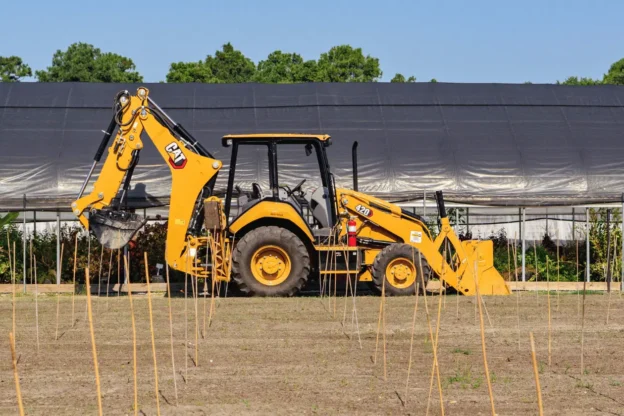
Back in May, our 1985 Ford tractor—the workhorse for our Maintenance and Horticulture Departments—decided it had lifted its last load. Repair was not an option due to both expense and age. The 2019 Kubota, though a good tractor, was not heavy-duty enough to be our sole solution. Jeremy Schmidt (Director of Horticulture) and Ralph Drury (Maintenance Manager) set out to find a worthy replacement. We ended up purchasing a Caterpillar 420D series tractor from Thompson Tractor in Mobile—see the picture below. This equipment purchase will propel Bellingrath forward as we continue to tackle deferred maintenance projects and create new spaces as outlined in our master plan. Expect to see this tractor being put to use in many areas over the coming years! If you’d like to help us pay for this essential item, please contact Dr. Cory Sparks, BGH’s Development Director, at 251.783.1378.

Creating an In-Ground Nursery

Speaking of moving earth, another project recently completed (using the aforementioned tractor) is the creation of an in-ground nursery for our new azalea collection. With our new azalea accessions burgeoning due to the generosity of Maarten Van Der Giessen, we needed a place to plant them—so we can grow them, propagate from them, and evaluate their performance while their cutting-grown progeny grow to a suitable size for adding to the gardens. Jeremy undertook converting an old, unused part of our nursery—the former “East Field”—into this new azalea growing area. Not only was the woven black ground cloth fabric removed, but we also realized that the aged irrigation system for this growing area needed to be completely rebuilt! Jeremy removed the rusted-out metal irrigation pipes and installed a new PVC plastic irrigation system in short order. After this, we tapped into the decades-old pile of compost that had accumulated to the west of the greenhouse range. Jeremy was able to “turn” said compost (with the new Caterpillar tractor) and then blend a whopping 125 cubic yards(!) with the existing soil that had sat for decades underneath the black ground cloth of the former “East Field.” The picture below, which seems to “just” show an area of soil in front of Greenhouse 2, is actually the result of weeks of work undertaken by Jeremy. Pretty soon, we’ll be planting our stock azaleas here, with new soil and new irrigation ready to go!

Looking Forward

These projects are part of our broader master plan, guiding Bellingrath Gardens & Home into its second century. By addressing past maintenance issues and embracing new improvements, we’re excited about the future. We hope you’ll visit us and see these changes for yourself. Your continued support through memberships and donations is invaluable as we move forward.

Visit and Connect with Us

Join the conversation and share your memories of Bellingrath on social media using #BellingrathGardens.

people in a crowd in 1949

The Start of a Tradition

By Tom McGehee
Museum Home Director

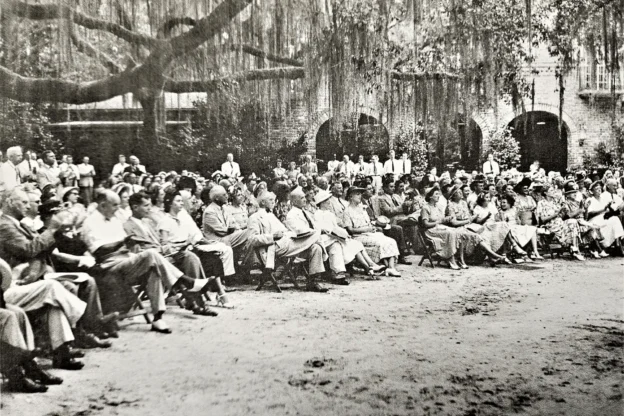
On Saturday, August 5, 1949, a crowd of 500 gathered for a party at Bellingrath Gardens. The occasion was Walter Bellingrath’s 80th birthday, and a news account noted that the 500 were his “personal friends and acquaintances.”

As he looked out at the crowd, he declared, “I bow my head in humbleness.” The Mobile City Commission had presented a resolution designating this “Bellingrath Day.” A letter from famed columnist Dorothy Dix was read aloud, in which she described Mr. Bellingrath as “a prince among men, a very great man who has done a very great work in the world.”

Judge Ben Turner spoke of his friend’s many local accomplishments, including his founding of the Rotary Club of Mobile, Waterman Steamship, Lerio Corporation, and his successful presidency of the Mobile Chamber of Commerce. Best of all, he said, he and the late Bessie Bellingrath had created Bellingrath Gardens purely for the enjoyment of others. And now, those Gardens had attracted over one million visitors since their inception.

Next, his grand-nephew, five-year-old Walter Bellingrath Edgar, pulled a wagon containing 15 silver loving cups to the stage. Judge Turner read the list of donors, and Robert Edington read aloud the inscription on each of the cups.

Walter Edgar at Mr. Bell’s birthday

The crowd then heaped their plates with fried fish and potato salad and enjoyed a memorable birthday lunch. A makeshift tent covered Coca-Cola employees, who handed out hundreds of ice-cold bottles.

At the close of the party, Mr. Bellingrath announced that the Gardens would be open, free of charge, to the general public on Sunday, August 6, which was his actual birthday. Bellingrath Gardens and Home is proud to continue the tradition begun by our founder 85 years ago.

Visit and Connect with Us

trimmed trees

Summer Cleaning

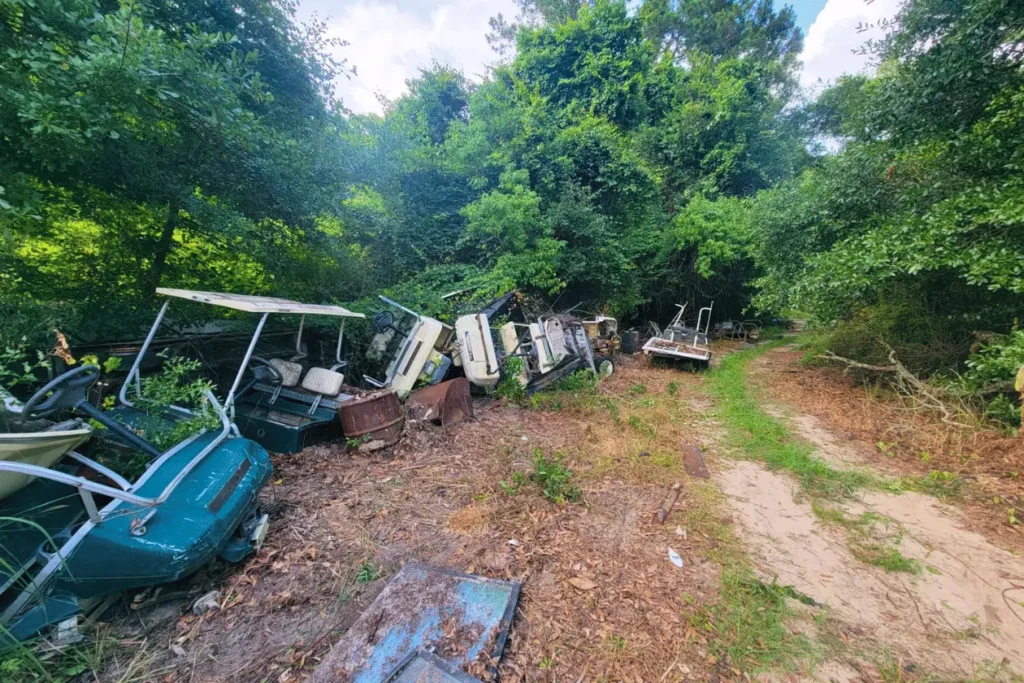
A view of the “boneyard” as it looked in late May 2024, a collection of unused junk and other worn-out items needing to be hauled away.

By Todd Lasseigne
Executive Director

I’m sure that some of you, in reading this column, will recall watching Bob Vila on “This Old House” on PBS in the 1980s. It was a show that was ahead of its time in the now-omnipresent “home improvement” genre, and one that left an indelible mark on me. As I’m sure many of you also would feel, there is just something satisfying about cleaning up or restoring a junked-out project or feature.

Well, at over 90 years-old, Bellingrath Gardens & Home has its share of messy areas, accumulated junk, and projects that have been delayed perhaps a tad too many times. This spring and summer, we have begun tackling a couple of these projects, and I find myself invigorated in seeing them progress and be completed.

The Boneyard Transformation

When I came to Bellingrath in 2020, I was made aware by staff of an area known as the “boneyard.” A boneyard, to be precise, represents an area where useful objects are often stored until such time that they can be repurposed. Many old institutions have such places, and many a find of precious objects have occurred in the boneyards of these institutions.

One interesting item that we have in the boneyard is an old fountain that we will utilize in the gardens one day, for instance. Otherwise, though, our boneyard has deteriorated into a junkyard – a catch-all place where virtually anything could be found: discarded, broken wheelchairs, various and sundry bricks and pavers, plywood, plastic stuff, old appliances, etc. I determined from practically my first day on the job that we would clean up this mess. Finally, as of the end of June 2024, I can say that a major portion of it is gone, including a whopping total of 11 junked golf carts and/or people movers!

Restoring the Wooden Fences

Another discovery that I made while wondering the back paths at Bellingrath during my first year on the job was the sad condition of some of our wooden fences. One, in particular, divided public spaces from nonpublic ones near the main parking lot. This fence was set around 3’ above the ground, then extended 6’ upward – an odd design in that you could literally crawl underneath it – but it was planted on the public-facing side with Japanese ligustrums.

The elapse of time had allowed these ligustrums to grow to over 20’ tall – so much so that they were shading our interplanted crape myrtles – and the fence behind them had decayed and rotted such that it was no longer an effective barrier, although it couldn’t really be seen due to the evergreen ligustrum screen.

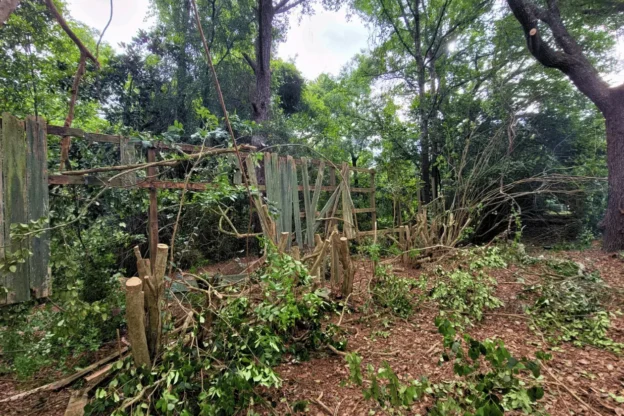
Never being knowing to ignore a good project waiting to be done, I assigned this task earlier this year to BGH’s Horticulture team. As of late June, I can now say that most of the ligustrums have been cut back to 4’ tall, and the rotted and damaged wood has been removed so that only the supporting beams remain.

A picture of one of our boundary fences, this dividing public areas from non-public spaces, seen while beginning to hard-prune back overgrown Japanese ligustrum plants.

Although this area looks a bit rough right now, the only way to handle this project was to handle it by taking the proverbial bull by its horns. We will be rebuilding the fence in the coming weeks, and the ligustrums will sprout anew and be kept at a manageable height. Three cheers to Bellingrath’s Horticulture team for making this project look easy!

Looking Towards the Future

You may wonder where this is all leading. Well, as of this writing, Bellingrath Gardens & Home is nearing the completion of a physical master plan, one that will guide us forward in the years and decades to come. As a beloved cultural and historical destination and organization, we are taking deliberate and highly purposeful steps to bring us into our second century of existence.

However, before that work can even start, we must acknowledge and confront the accumulation of no-longer-needed items and materials, and we must address deferred maintenance projects. Taken all together, these seemingly unrelated goals – setting forth a future through the master plan and dealing with the past and present through maintenance and clean-up – will propel us forward, and we are excited about this.

We hope that you will feel inspired as you come to Bellingrath and see these improvements, and we hope that you will support our work through your memberships, donations, and advocacy to others.

Visit and Connect with Us

Join the conversation and share your memories of Bellingrath on social media using #BellingrathGardens.

the great bellingrath harvest graphic

Announcing The Great Bellingrath Harvest: A New Fall Festival!

By Cassidy Smith
Marketing & PR Manager

We’re thrilled to announce a new and exciting fall festival at Bellingrath Gardens & Home—The Great Bellingrath Harvest! This fresh celebration of fall builds on our cherished tradition of family fun and will run from September 21st through October 31st. Get ready for a season brimming with fun, festivities, and family-friendly events. Our gardens will transform into a vibrant autumn wonderland, featuring delightful activities that celebrate the beauty and bounty of the harvest season.

Activities Include:

  • The Harvest Market: Discover a lively medley of local vendors, toe-tapping music and scrumptious delights from a variety of food trucks.
  • Scarecrows in the Gardens: A delightful display of creatively decorated scarecrows that will amuse and inspire.
  • Jack-O-Lantern Jubilee (Formerly known as Boo!): Enjoy trick-or-treating stations, costume contests, and Halloween themed activities.
  • Fall Floral Showcase: Revel in the stunning beauty of fall blooms arranged in exquisite displays throughout the Bellingrath Home.
  • Outdoor Cascading Chrysanthemums: Witness our gardens come alive with a breathtaking bloom out.
  • And More! Stay tuned as we roll out additional enchanting activities and surprises.

Mark your calendars and spread the word! We can’t wait to celebrate with you!

Become a Vendor

We are now welcoming vendor inquiries for the fall! If you’re interested in becoming a vendor, please reach out to our Programs & Events Manager, Haley Ligon, at [email protected] or call 251-459-8868.

Visit and Connect with Us

Join the conversation and share your memories of Bellingrath on social media using #BellingrathGardens.

figurines

Darby and Joan

By Tom McGehee
Museum Home Director

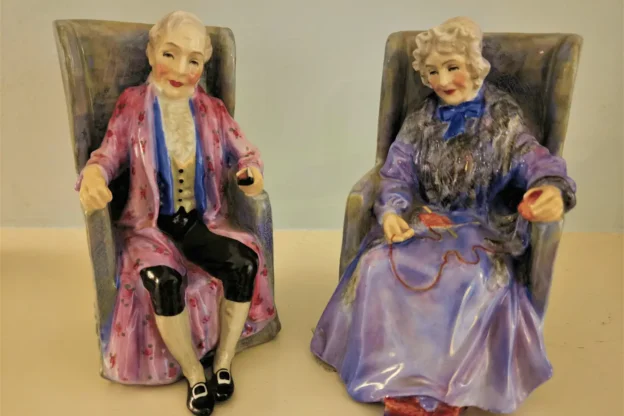
This pair of figures, first issued by Royal Doulton of England in 1930, depicts Darby and Joan, a happily married old couple who epitomize sentimentality about love and marriage. They first appeared in poems 200 years earlier and, by the Victorian period, were still the subject of poets:

Hand in hand when our life was May
Hand in hand when our hair is gray,
Love will be with us forever then
Always the same, Darby my own,
Always the same, to your old wife Joan

Another Brit, Noel Coward, took a new slant when he wrote “Bronxville Darby and Joan” for Broadway in 1961. In that version, the pair sang:

We’re a dear old couple who detest one another,
We’ve detested one another since our bridal night,
Which was squalid, unattractive, and convulsive,
And proved beyond dispute,
That we were mutually repulsive.

The pair in the Bellingrath Collection is dated 1940 and was purchased by Mrs. Bellingrath along with a total of 36 others at Goldstein’s Jewelry Store, which was then located on South Royal Street in downtown Mobile. The 1943 inventory placed the entire collection of Royal Doulton figures in a basement storeroom. Darby and Joan have been on display in the Morning Room since the Home opened in 1956.

Visit and Connect with Us

summer house pavilion

The Summer House

Artistic rendition of the restored Summer House, courtesy WAS Design

By Todd Lasseigne
Executive Director

Last year, through the generosity of the Hearin-Chandler Foundation, Bellingrath Gardens & Home received a major grant of $50,000. This support has enabled us to begin the restoration of the Summer House, a historic garden structure, to a new state of condition and appearance.

Discovering the Summer House

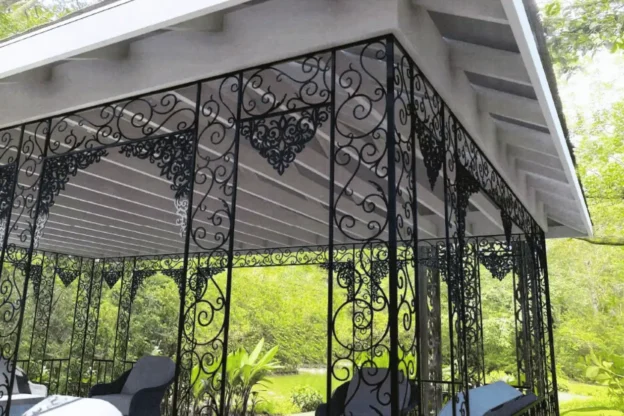
If you don’t know what or where the Summer House is, please take time on your next visit to Bellingrath to walk around Mirror Lake. On its northwest side, you will find a small roofed structure – a shelter from the sun and weather – with bluestone paving for the floor and iron lace columns.

Historical Significance

This structure, dating back to our founder’s time, is a borrowed feature inspired by ones seen by Mr. and Mrs. Bellingrath in their travels to European gardens in 1927. Historically, these structures were intended for guests to relax after journeying through large estate gardens. Some summerhouses in these European gardens were designed as follies – historic and often whimsical architectural creations.

Our Summer House, while not whimsical in its design, evokes historical echoes of Mobile’s past with its proportions, dimensions, hip-roofed structure, and ironwork.

Current Condition and Restoration Needs

Today, the Summer House needs significant repair and restoration:

  • Roof Replacement: The asphalt-shingled roof, although historically existing, is not appropriate for the original structure. We intend to replace it with a metal roof similar to the one atop the Bellingrath Home’s west veranda.
  • Wooden Components: The roof eaves are partially rotted and damaged from wildlife.
  • Iron Lace Metalwork: The iron lace metalwork has corroded at the bases where they are set in concrete. The concrete perimeter where the columns were installed has pocked over time.
  • Structural Integrity: Some iron lace panel inserts within the horizontal railings have fallen out due to deteriorating welds.

Clearly, this important structure needs some love.

Restoration Journey

Initial Observations and Planning

Three years ago, it was observed that the Summer House needed repairs. In August 2021, Bellingrath engaged the services of WAS Design of Mobile to envision a restored and newly inspired look for this structure.

Design Changes

Several major changes were decided upon:

  1. Open Ceiling: Opening up the ceiling to the rafters to make it feel more spacious.
  2. Comfortable Outdoor Furniture: Introducing more comfortable outdoor furniture.

Engineering and Finalizing Plans

Last fall, after receiving support from the Hearin-Chandler Foundation, we re-engaged WAS to bring the 2021 conceptual designs forward. A mechanical engineer assessed the iron lace, particularly the corrosion, and other issues. Due to the complexities of structural integrity, wind firmness, and roof ventilation, the project was passed to TAG (The Architect Group) in Mobile.

Moving Forward

We are now in the process of finalizing our plans and hope to begin construction and restoration work soon. Stay tuned for the excitement, all thanks to the generous support of the Hearin-Chandler Foundation.

The restoration of the Summer House is more than just a project; it’s a revival of our history and a tribute to the timeless beauty of Bellingrath Gardens & Home. We invite you to witness this transformation and enjoy the renewed elegance of this historic structure.

Thank you for your continued support and interest in Bellingrath Gardens & Home.

Visit and Connect with Us

Join the conversation and share your memories of Bellingrath on social media using #BellingrathGardens.

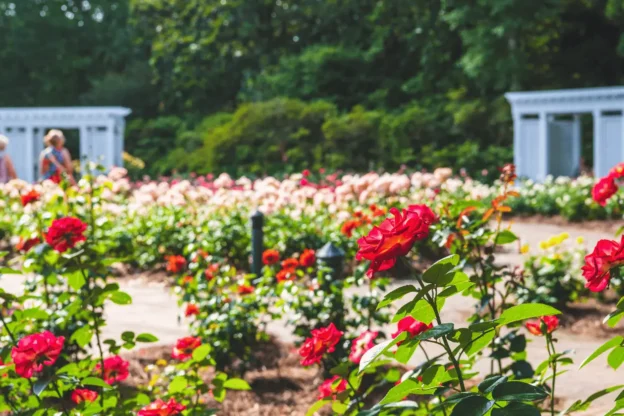
rose garden

The Backwards Garden

By Jude Forsyth
Friends of Bellingrath Member

My friend, Lori Bosarge, and I love being members of Bellingrath Gardens. Aside from the many other benefits, the fact that we can walk there endlessly year-round for such a small cost is priceless to us. It’s such a pleasure to see the garden every week, letting the colorful seasons run like little children, one after another in their varied outfits. They run forward, ahead of the others, laughing and shouting at each other as they skip over their path. But what would happen if they decided one day to be backward children?

I think, like most frequent visitors to the gardens, Lori and I have our regular walking path. It’s so pleasurable to walk into the Rose Garden, towered over by the old mall fountain that sprinkles water in the air, which falls gently over the more than 1000 roses of different colors and varieties. The smell of it! We talk and laugh as we walk, usually at a faster pace (to be able to say we are truly exercising), past the Great Lawn, marveling at the seasonal flowers planted along the path. How many workers and volunteers did it take this season to prepare and plant this stunning stretch of color and texture? What will it look like in the full bloom of summer? We continue our trek and enjoy seeing the subtle changes on our route. The same route each time.

Then one day, Lori suggested to me that we walk a different way. What would happen if we decided to be backward visitors? How would the garden look if we reversed our path? Like those imagined little children, laughing and almost skipping, we gleefully started out on our new hike to see the backward garden. Would anything be different?

I admit the walk wasn’t as easy as I thought it would be. Sometimes I was a little turned around, not sure which way to go. We decided not to just follow the set-out path with its paved and stoned trail laid out before us but to also take small detours to see what scene might be hidden from us. We were hardly out on our new hike before we were sidetracked to a grassy area and found a field that revealed a wraparound wood bench, skirting the outline of this impressive tree trunk. What a wonderful find. We usually walk up past the Great Lawn and then, to finish our walk, we pass the Asian-American Garden towards the gift shop. But we are backward today! To go down into The Rockery, instead of up through it, is to notice more than just the flowing grottos but also the striking stone wall. Crossing the bridge in the opposite direction showed us another tiny grassy spot we had never seen before, and it gave us a new view of the waterfall behind the bridge. Coming up to the lion, we realized we had always been looking at the tail end (hee hee) and never looked directly into his face. Do you know what expression is under his majestic mane?

A couple of times, I mistakenly turned onto a service road. We are such creatures of habit! Still traveling in our backward wander, we went through the gazebo to the giant pots behind it and saw plants we hadn’t seen before. Continuing back to Mirror Lake, I noticed a different view of the Summer House. What did the long-ago occupants see from that little window, I thought, as I passed a small grotto that I had never observed before. That’s what happens when your focus is on the stairs ahead of you instead of what’s beside you. Now I have seen that secret place. Did you know there are several bird boxes that sprout out of the water at the boardwalk? I saw them this time because I wasn’t facing the bay as I strolled through. Gotta love this backward ramble!

Coming up behind the beautiful Delchamps Gallery, we entered as we always do, so we could marvel at the many offerings there and see the vintage pictures of the people who inspired it so long ago. It’s hard to believe that a porcelain flower can look just like the real one. When I was walking on my own one day, I not only listened to the audio talks along the way but also sat and watched the video in the gallery and learned so much about the garden’s history. It’s wonderful to see the faces of the people who made the garden possible.

Lori and I continued to meander our way to the house and realized that on our regular walk, we always took the first path down to see the “lady” in the pond and then down to the waterfront. So we didn’t get close to the quaint garden between the buildings at the house. It was delightful to see it, and it was a surprise to meet Cory Sparks, the Director of Development, walking with a new employee. If we hadn’t been on our backward journey, would we have met him and had such a delightful chat?

Coming back through the Great Lawn, it’s amazing what you observe. I guess it’s because being right-handed, we often looked more to the right. Really, it is hard not to continue to look out at the lawn and all it offers. Walking through our adored rose garden from the opposite direction, I saw a view I had never seen before. Exiting under the old metal bridge to the front pathway of the garden is truly a breathtaking sight. Heading to the gift shop, I had the same feeling as our regular walk—a certain kind of sadness that we would soon be back in our own homes. It feels like a lament that we will never see the garden again. Until, of course, three days later, when my friend Lori and I now have to decide what new route we will take this time in our beautiful garden!

Thank you Bellingrath staff. We are so grateful to you!

Jude Forsyth, a Bellingrath member, is a local writer, teacher and speaker and a Bellingrath enthusiast.

Visit and Connect with Us

Join the conversation and share your memories of Bellingrath on social media using #BellingrathGardens.

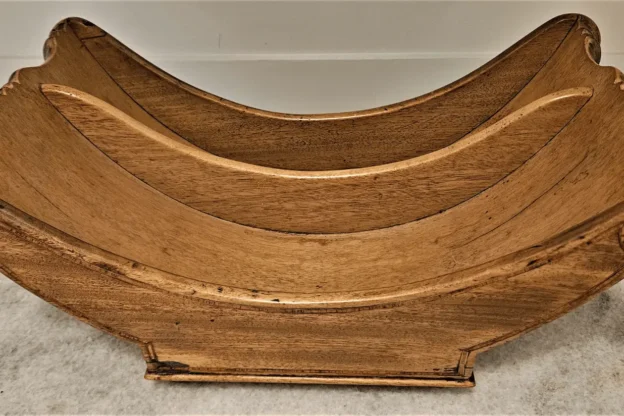
wooden cheese cradle

The Cheese Cradle

By Tom McGehee
Museum Home Director

On display in the Dining Porch of the Bellingrath Home is a wooden cheese cradle dating to between 1820 and 1830. These cradles or stands were made in England and have two sections. The larger section would hold half a wheel of Stilton cheese, a British creation with a bold flavor. The smaller section would have been filled with cut-up pieces of bread.

Another name for this is a cheese “coaster” as its smooth feet are designed to allow it to be coasted down the dining table atop a cloth. The distinctive curved interior would hold the cheese steady as diners cut out wedge-shaped pieces of the cheese.

England boasts over 700 varieties of cheese. Stilton was developed in the village by that name in the 1720s, and for many years, that was the sole source for what many came to believe was the finest cheese made. By the early 1800s, production of Stilton cheese had expanded, and its popularity led to the creation of special cradles of wood, silver, and ceramics.

Stilton cheese is still produced today using a legally binding recipe. The containers created for its service some 200 years ago remain highly collectible.

Visit and Connect with Us