Author Archives: Olivia Garrett

Compost: The Secret Ingredient in your Southern Garden

Compost, like butter in our favorite recipes, is not to be used sparingly! Nearly every plant we grow in the garden benefits from decomposed organic matter—and often for reasons that we may not think about right away. Bellingrath Gardens is building and processing thousands of cubic yards of rich black gold for use in our seasonal and permanent planting beds.
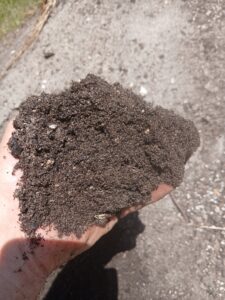
Eureka! Black Gold!


There are three basic categories of soil: clay (teeny tiny soil particles), loam (medium soil particles), and sand (beach ball-sized particles in comparison to clay and loam). In south Mobile County, our soil is almost entirely made of beach balls (sand). There’s brown sand, white sand, red sand—every color of sand.  Even local “topsoil” is sand. I’m amazed at all the iconic plants that are native right here in our native soil. Massive live oaks, towering longleaf pines, palms, grasses, carnivorous plants, and more wildflowers than I can count are all standard botanical fixtures of south Alabama. Some growing in our cultivated acreage, and others in the periphery, hundreds of sand-loving species are currently rooted into Bellingrath’s 900 acres. However, in Bellingrath’s cultivated beds, we are proud to carry on Walter and Bessie’s excitement to showcase for you an even broader representation of the plant kingdom—as well as impossibly concentrated combinations of seasonal color and texture. And that’s where compost enters the picture.

Sometime in the past, an immense amount of compost-rich soil was hauled onsite to create Bellingrath Gardens’ extensive seasonal planting beds; and everywhere you see bedding plants, the soil is primarily made up of composted organic matter. Why go to all the trouble to add so much compost? Let’s get philosophical for a moment. Compost means to plants what the reading of a wealthy uncle’s last will and testament means to a very fortunate nephew. Compost is the posthumous result of plants that found success in their lives—and it is this inheritance that gives future generations of plants a head start and a promising future. I guess that’s why we gardeners get so excited to cultivate plants in our compost “rich” soil.

Ok. Fine. But what does compost actually do as a soil amendment? So glad you asked. Sand, like every type of soil, has its pro’s and con’s. While sand is well drained and not prone to compaction, it can dry out too quickly, lacks certain nutrients, and is prone to leaching out what few nutrients it does offer. There are so many reasons compost is absolutely critical to success in the garden, but since Bellingrath Gardens’ plants are rooted into sandy soil, let’s focus on three ways compost atones specifically for sand’s limitations: through moisture retention, nutrient retention, and cation exchange capacity.

Cation exchange capacity, or CEC, is a measure of the soil’s ability to feed plants through the exchange of positively charged particles—called cations (pronounced cat-ions)—some of the most crucial and frequent exchanges involve the cations calcium, magnesium, potassium, and ammonium. In a nutshell, the higher a soil’s CEC, the more chairs there are at the dinner table where soil is feeding plants. More chairs means more feeding! Mobile County’s sand has a very low CEC (1-5) compared to fine-textured soil like clay and loam (15-30). Get this… compost has a CEC of over 100!!! Jackpot! Many aesthetically supercharged garden plants, especially bedding plants, are very hungry indeed (with a small handful of notable exceptions); and in order to grow them and display them to the highest standards, a whole bunch of cations need to be exchanged along they way.

Most granted wishes come with some sort of an unforeseen catch, hence the phrase “Be careful what you wish for.” In 2023, I remember discovering the annual precipitation in Mobile—67 inches—are you kidding me!? Nothing will ever need irrigation! My wish was granted! The catch? No matter how much rain we get, the sandy soil dries out less than a week! As someone who now gardens on south Alabama sand, I have tempered my initial exuberance. Guess what? Compost is the answer! Actually, compost is possibly the answer to all of life’s problems. Organic matter increases the field capacity of sand… basically, that means sand with compost holds on to more water than just sand. Field capacity was explained to me like this: Think of a sponge that is totally soaked, but no longer dripping. If one drop of water goes in, one drop of water falls out—this sponge is at field capacity. Increased field capacity means more drops of water can stay in that sponge… and maybe we can make it to the next rain before we have to irrigate again. As an aside, when soil dries out, the uptake of nutrients slows down even before the plant begins to wilt—another reason that most well-watered garden plants grow better. Compost-rich soil is a wish-come-true.

We often think of compost as being a form of plant food, but if that’s all organic matter is good for, couldn’t we just throw a bag of 10-10-10 on our plants instead? Ha! Funny. In addition to containing most of the 17 essential nutrients for plant growth (waaay more than just the three numbers on a bag of salt-based fertilizer), compost also helps sandy soil hold on to certain nutrients, like nitrogen, that are typically prone to leaching out of the rootzone. Actually, salt-based fertilizers can make the leaching problem worse over time, but that’s a good topic for another day. Compost’s benefit to the stability of soil fertility is interconnected with its positive impact on CEC and moisture retention.

But nothing good lasts forever—and compost—compost doesn’t last forever. Plants and microbes consume it over time, and eventually it mostly “evaporates” into the atmosphere as carbon dioxide and other gasses. And that brings us back to my opening analogy—butter as an ingredient in our favorite recipes: we need a lot of it, we probably can’t add too much, and it will never be enough.

In order to recharge our seasonal planting beds, and in pursuit of our goal to vastly expand our cultivated areas and living collections, we are piling up, turning, and processing over 10,000 cubic yards of compost onsite to add to the garden (it’s actually closer to 25,000 yards, but I kept the number low to make it sound believable).

Two of dozens of piles


I quickly learned that commercial sources for bulk compost are scarce in lower Alabama, as large-scale composting programs are not as prevalent as in other parts of the country. Well, I can’t complain, because we weren’t actively composting our organic matter either. All our nursery and garden debris was just being dumped and forgotten in the back of Bellingrath Gardens…for decades! Let’s just say we are now making full use of this immensely backlogged resource. Because it’s already aged, we will only need to turn it a couple times to incorporate enough oxygen for the final stages of aerobic decomposition. But we’ll have to turn those piles a couple more times again to kill weed seed and rhizomes—turns out weeds like growing in compost just as much as other plants! Oh well! Compost happens. Better late than never.

Utilizing our in-house compost blend, our bed rejuvenation and expansion campaign has already begun. Watch for these efforts to really ramp up in the next couple years as we finish more and more compost.

Our diesel-powered pitchfork moving finished compost into the garden.


And as you feast your eyes on Bellingrath Gardens’ beautiful vistas, remember that all of our favorite southern garden recipes go heavy on the compost.  We could cook up something without all that rich black gold, but it just wouldn’t be as delicious.

Tune in next time for another Bellingrath Gardens episode of “As the Compost Turns.”

Visit and Connect with Us

Mr. Bellingrath’s Desk

Dominating Mr. Bellingrath’s bedroom is his impressive desk upon its spiral turned legs. The piece does not appear in the 1943 or 1947 inventories of the Home’s contents. The 1964 guidebook to the Home explains that it had previously been in the library of the Bellingraths’ home on Ann Street.

And why didn’t Mr. Bellingrath have a desk in his home at his Gardens? The answer is he did, but it was a modern office desk in his working office in the basement. So, he apparently did not have this decorative desk moved to its present location until after 1949 when he was preparing the Home for the eventual tours to take place after his death.

The author of the guidebook said that Mr. Bellingrath had purchased “the English walnut desk” and arm chair “in Chicago at one of the antique shows.” The only problem with that statement is that it was nowhere near being an “antique” during his lifetime and it is not English.

Research has found that it was made in Grand Rapids, Michigan by the Luce Furniture Company which had been established in 1896 by Ransom C. Luce. Thomas S. Handley, who had trained in London served as staff designer there and held a special interest in English period styles and was with the firm until 1915. It is safe to say that this was one of Handley’s designs.

What Style is it?

The style is definitely English, but the specific style is debatable. Some would term it Jacobean (1603-1625) or is it William and Mary (1685-1720)? In the 1980’s an appraiser termed it “Charles II” a term interchangeable with Carolean (1660-1685).

The only thing certain is that it combines many of the designs from the 17th century in England which were influenced by furniture being made in both Holland and France. Styling was moving away from the starkness preferred by the Puritans and moving towards a more opulent look. The walnut desk is skillfully inlaid with ebony and a vine of flowers and leaves using mother of pearl and ivory.

This combination of designs was a hallmark of the many furniture makers in Grand Rapids in the early 20th century. Those firms were seeking to create adaptations to suit American consumers, not faithful reproductions.

It is very doubtful that Walter Bellingrath would have any idea that his desk was American made. Nor would he ever guess that Jex H. Luce, his next door neighbor on Ann Street in the 1920’s, was the grandson of the founder of the Luce Furniture Company.

Visit and Connect with Us

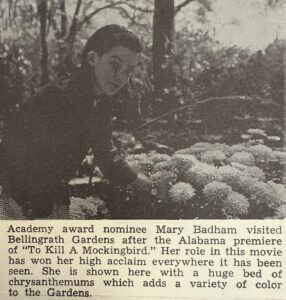
Bellingrath and the Mockingbird

On July 11, 1960, Harper Lee’s To Kill a Mockingbird was published. In the sixty-five years since that date the Pulitzer Prize winning book has been translated into 40 languages and sold an estimated 40 million copies. The 1962 film supplied Gregory Peck with a signature role and an Oscar. While authors notoriously dislike screenplays of their work, Miss Lee so liked Peck’s interpretation of her father that she presented him with Mr. Lee’s pocket watch.

Two important characters have a strong connection to gardens and flowers. Bellingrath Gardens is mentioned in both the book and the film but in different places. And since the plot takes place in Alabama in the mid-1930’s it’s not surprising that the Monroeville-born author would have included it in her book.

In the novel, in Chapter 8, neighbor Maudie Atkinson’s house burns down on a cold night and the firemen trample her flower beds. Throughout the beginning of the story Miss Maudie is often observing the antics of Scout, Jem and Dill as she works in her garden and is portrayed as their friend and confidante.

As the children tell her how sorry they are, Maudie Atkinson, ever the optimist, has this to say:

“Always wanted a smaller house Jem Finch. Gives me more yard –gracious I’ll have the finest yard in Alabama! Those Bellingraths’ll look plain puny when I get started!”

The 1962 screenplay does not have this scene. Instead the mention comes early in the film when Jem, Scout and Dill are happily racing to meet Atticus as he returns from work. The crotchety porch-bound Mrs. DuBose does not appear in the book until Chapter 11 and Bellingrath Gardens is not mentioned there. However her camellia garden, which is decimated by an angry Jem is.

In the movie version Mrs. DuBose’s garden is used for a different purpose. Jem has walked ahead but races back to his sister and Dill with the somber warning that Mrs. DuBose is out on her porch. He whispers to a curious Dill: “She has a Confederate pistol under her shawl. She’ll kill you quick as look at you!”

After Scout gets the woman agitated by saying “Hey” to her as she passes instead of “Good afternoon” the three children run on to meet Atticus. As they walk back Mrs. DuBose is still hollering and Atticus plays the perfect gentleman. He removes his hat and offers her this greeting:

Goodness, gracious look at your flowers! Mrs. DuBose, the Gardens at Bellingrath have nothing to compare with your flowers. Your yard is going to be the showplace of this town! Grand seeing you Mrs. DuBose.”

The old lady’s fit instantly disappears as she glances proudly around her garden.

Anyone who enjoys Bellingrath Gardens should take a look at either this entertaining novel or movie. Watch for the garden imagery and Bellingrath Gardens in one of the most famous books of the 20th century which has now reached an important birthday.

Visit and Connect with Us

Military Mondays: Honoring Those Who Serve

At Bellingrath Gardens & Home, we are proud to support the men and women who serve our country. As part of our ongoing commitment to military families, we want to raise awareness about Military Mondays, our year-round program offering a 25% discount on Gardens-only admission for all active-duty military members, veterans, and their immediate families.

This special offer is our way of saying thank you for your service—and inviting you to relax, recharge, and enjoy the natural beauty of the Gardens.

Military Mondays: What You Need to Know
  • 25% Discount on Gardens-only admission

  • Available Every Monday

  • Open to active-duty service members, veterans, and immediate family members

  • Military ID required at time of purchase

  • Excludes special events, including Magic Christmas in Lights and the Gulf Coast Chinese Lantern Festival

Whether you’re visiting for the first time or returning to see what’s in bloom, Military Mondays are a perfect way to enjoy the Gardens at a reduced rate.

Additional Free Admission Days for Veterans

In addition to Military Mondays, we offer free Gardens admission for veterans on:

  • Memorial Day

  • Veterans Day
    (Note: Free admission does not apply during special events)

A Peaceful Place to Reflect and Reconnect

Bellingrath Gardens & Home has long been a place of serenity and inspiration. From vibrant seasonal displays to tranquil lakeside views, there’s something for everyone to enjoy—especially those who give so much in service to our nation.

We hope this discount helps make it easier for military families to experience the beauty and peace of the Gardens together. Thank you for your service, and thank you for being a vital part of our country’s story.

Visit and Connect with Us

Winter is Coming, So We’ve Turned Up the Heat

It’s almost 100 degrees, and we’re 100 days from our next 32-degree night.  So why are we installing greenhouse heaters in July? Glad you asked. Only 164 days have passed from our record-breaking January snowstorm until the 4th of July. So as crazy as it seems to be installing greenhouse heaters in July, at least we can all agree, “winter is coming.”

The greenhouses at Bellingrath Gardens and Home have bolstered our immense botanical displays since Walter and Bessie opened the doors to welcome the public almost a century ago. Our greenhouses are a critical behind-the-scenes component of the gardens. In addition to the production of bedding plants, we depend on our greenhouses to perpetuate a huge collection of stock plants used for propagation and research, and to accommodate rotational displays of specimen plants. Even this far south, year-round greenhouse operation depends on the input of heat when long nights are colder than what is adequate to grow crops. Nearly every plant destined for a charmed spot in Bellingrath Gardens will essentially cease to function metabolically (they stop growing) below 55 degrees, potentially causing the greenhouse team to miss production deadlines. Furthermore, essentially every plant under glass will be severely damaged or killed if the temperature inside our greenhouse drops below freezing even for a minute.

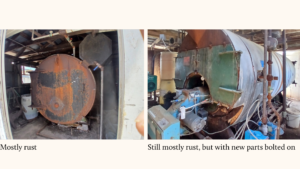
Bellingrath’s conservatory and greenhouse space has been heated to accommodate year-round operation since the 1930’s. In the 1960’s, a huge boiler was installed to generate steam in advance of greenhouse construction on the site where our operations continue today.

Transported by a myriad of iron pipes from the boiler, the heat from pressurized steam radiated from metal fins to heat concrete benches and the air inside a dozen greenhouses to ensure our plants all had comfortably heated seats. Like so many critical installations of the early- to mid-20th century at Bellingrath Gardens and Home, our greenhouse boiler was the top of the line choice for its time. And for half a century, a boiler system worked behind the scenes to enable the production of several million potted plants. In fact, the boiler was so large and successful, we continued to expand the greenhouse complex around it into the 1990’s—the boiler heating almost one acre.

Radiant heating of greenhouses was the industry standard from the 1880’s through the 1970’s. For many reasons (mostly cost-related), smaller gas heater units have replaced massive boiler systems.  No matter how grandiose, no matter how well-built and installed, no matter how strategically utilized, no matter how immune to obsolescence, and regardless of maintenance—machines, systems, tools, infrastructure—they all wear out eventually. In 2020, Executive Director Todd Lasseigne recognized an immediate need to upgrade our greenhouse heating system. The choice: each year, continue to throw away about $10k in repairs, while enduring cold and sleepless nights wondering if the system had failed yet…OR…uncomfortably stretch the budget for the next five years by spending over $150k to purchase and install 15 new gas heaters, after running a quarter mile of gas lines. More rust than iron, more headaches than dependability, more repair bills than made sense, the boiler system was decommissioned.

The final five heaters are being installed as I type this—another chapter written in support of the Bellingrath’s continuing legacy. Certainly, greenhouse heating infrastructure changeouts aren’t the sexiest thing to write about; but our latest achievement is just another part of being good stewards of this magical place. Winter is coming, and we are prepared.


Visit and Connect with Us

Unifying Cultures: Tsubaki, the Camellia

Introduction

As winter draped Osaka and Kyoto in silence, the Camellia bloomed—quiet, resolute. In that
final chapter of my journey through Japan, it moved me to reflect on how a single flower could
so gracefully weave threads between distant cultures.
The precise dates of the introduction of various Camellia spp. outside of Asia remains a
mystery, however most Camellia experts generally agree that with increased trade between
European and Asian countries starting in the 16th century, species valued for their ornamental
properties, tea, or oil were distributed to European countries, and eventually to the Americas,
Africa, and Australia. In centuries since, thousands of cultivars (“cultivated varieties”) gained
prominent placement worldwide. Indeed, many countries have a centuries-old relationship with
the genus.
Gathering at an international Congress with representatives from dozens of countries, I learned
the different names for specific cultivars, the cultivation “rules of thumb,” and what breeding
objectives are the most valuable. The International Camellia Society’s biennial Congress is held
in various countries where Camellias are cultivated, and provides a platform for the
dissemination of information, and the celebration and admiration of the genus Camellia.

Osaka, Osaka Prefecture

After an adventurous visit to Oshima Island, we began the final leg of our journey in Osaka.
Famed for its ancient temples, we visited a number of those as well as a collection of botanical
art of Camellias. The Osaka Museum of Natural History houses this collection and showcases
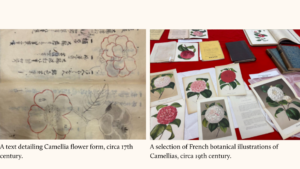
four centuries of Camellia literature and its botanical art. The late Dr. Shinichiro Kishikawa, a
medical doctor with a passion for horticulture, compiled an extensive collection of documents
during his life, and the museum now proudly displays them. Thanks to Dr. Kishikawa’s
meticulous care in establishing this collection, the future of these historical documents is secure.

Following our insightful visit to the Kishikawa Camellia Collection at the Osaka Museum of
Natural History, we concluded the day by touring the Hattori Ryokuchi Arboretum. Camellias
adorned berms in sweeping arcs, echoing the splendor of Tsubaki Yama at Nonoichi Central
Park.To my surprise, I discovered two cultivars in the collection that originated in Mobile,
Alabama: ‘Sawada’s Dream’ and ‘Jackie Mann.’ Both are steeped in history. What makes these
cultivars especially meaningful is that ‘Sawada’s Dream’ was developed by Mr. Kosaku Sawada,
a Japanese nurseryman who emigrated to Mobile in the early 1900s. There, he founded
Overlook Nurseries, where he bred and sold plant material imported from Japan—most notably
Camellia japonica and C. sasanqua. ‘Sawada’s Dream’ is one of his signature varieties,
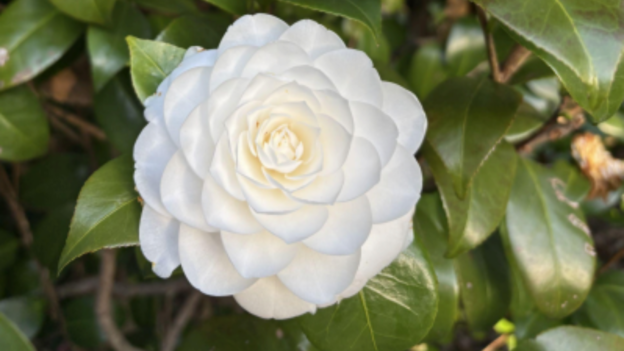
treasured for its perfectly imbricated formal double form. Its petals fade from white in the center
to blush towards the edges, giving the flower a delicate, porcelain-like quality, with a slight
translucence that enhances its beauty.
As for the other Mobilian cultivar, ‘Jackie Mann,’ Mr. J.M. Haynie developed this beauty near
Bellingrath Gardens and Home in Theodore, Alabama. Like ‘Sawada’s Dream,’ its form boasts a
stately, large to extra large formal double that effortlessly captures the gaze of any admirer.
Discovering these two cherished treasures from Mobile, Alabama, nestled here in Japan feels
truly remarkable, as it demonstrates the enduring bond between the two countries.

Kyoto, Kyoto Prefecture

After a restful night at the Karasuma Kyoto Hotel, we set out to explore several temples,
beginning with Higashiyama Jishō-ji (慈照寺), the “Temple of Shining Mercy.” At the heart of its
tranquil grounds lies an intriguing sand sculpture: a tall cone rising from a field of meticulously
raked white sand. This feature, pictured below, is called a kogetsudai, or “moon-viewing
platform.” It symbolizes the tranquility and power of Mt. Fuji and is said to reflect the moonlight,
evoking the mountain as a gateway between Earth and the heavens. Nearby sits the ginshadan,
or “sea of silver sand,” with rippling patterns that complement the kogetsudai much like Suruga
and Sagami Bays magnify the majesty of Mt. Fuji.

Later that day we visited Reikanji Temple. Renowned locally as the “Camellia Temple” due to its
richness of Camellias, the site prominently features the Nikko Camellia, a type favored by
Emperor Gomizunoo, who founded the temple during his 17th-century reign. The Nikko
Camellia is characterized by kara flowers, which have small petal-like stamens arranged in a
circle (not to be confused with Higo Camellias). Other cultivars represented in the temple are
‘Shirobotan,’ ‘Yako,’ ‘Maizuru,’ ‘Kinugasa,’ and ‘Shiratama,’ all originating from Kyoto.

The next day we took a trip to Kyoto Botanical Garden. In its nearly one hundred year history,
the garden has endured many significant challenges, most notably being slated for a housing
development in the 1940s. However, with the efforts of dedicated local citizens, the garden was
returned to its original glory in the 1960s. Since then, the garden has amassed some 12,000
plant taxa across a wide range of genera, showcasing a highly varied palette that includes
European-style and sunken gardens, as well as impressive collections of bonsai, Hydrangeas,
Camellias, and Irises.
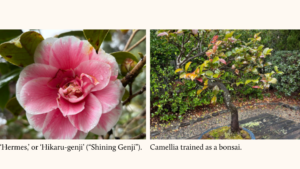
Among the Camellia collection, I found ‘Hikaru-genji’—known as ‘Hermes’ in the
U.S.—especially intriguing. Named after the luminous protagonist Genji from Lady Murasaki
Shikibu’s 11th-century classic The Tale of Genji, the cultivar perfectly embodies his refined
brilliance.

As the International Camellia Society Congress came to a close, we gathered for a farewell
celebration where a magician’s illusions danced before our eyes. Much like the journey itself,
the performance left us spellbound and filled with wonder once again. As the evening faded, a
toast was raised to the Camellia, honoring its enduring beauty and quiet power to unite across
cultural boundaries.

Visit and Connect with Us

Ok, Now. What’s Next?!

Sleep-deprivation has a way of working on you. Nine 4-days-long “weekends” of the inaugural Gulf Coast Chinese Lantern Festival, plus the daily work involved in keeping Bellingrath Gardens & Home open to the public and looking at its best, took a toll, but we survived and we’ve emerged as a stronger and even more seasoned organization. Our thanks go to you, plus the 40,000 other guests, who attended this inaugural event! We also thank Tianyu Arts & Culture for placing faith in us as a nonprofit organization to partner with them and host a Chinese lantern festival. Initial plans are already afoot for the 2026 show, and we ask you to make sure to book your calendars with the start and end dates of April 16 and June 21, Thursday through Sunday nights, in 2026!

Because of the success of the Gulf Coast Chinese Lantern Festival, several projects are either underway or have recently been completed. We hope you notice some of these projects as you continue to visit Bellingrath, although some, admittedly, are located in non-public spaces. One of these projects was a $26,000 replacement of the worn-out steel fence and automatic gate opener located to the south of the Admissions Building. This new fence and gate, 8’ tall to exclude plant-hungry white-tailed deer, is up and working beautifully, we’re happy to report. Please note how it matches the other new fence and gate installed by the pet motel last year. Two other GCCLF-funded projects entail much-needed roof work on a couple of back service buildings: a $23,000 roof reseal and gutter replacement on the headhouse building that serves the Greenhouse Complex, and a $11,500 roof replacement on the Horticulture and Development Office Building. With these two roof projects underway, we will have rehabilitated roofs on four buildings over the past three years – the Boehm Gallery Building, the Security Building, and the two aforementioned ones! In Jeremy Schmidt’s article, you’ll also read about the greenhouse heating project, a major portion which was funded through the success of GCCLF. Bellingrath has also completed a $24,000 overhaul of our walk-in freezer that is utilized by the Café, a much-needed project for a critical piece of equipment that must operate in a zero-fail capacity. And lastly, coming soon you will see the first phase of improvements that we have planned for the interiors of the Admissions Building. We’ll be working on new flooring, painting, and wallpaper, with new countertops and other features to come a few months later. We think that all visitors will enjoy this much-needed refresh of Bellingrath’s front door, a building that everyone walks through, forming their essential first impressions of Bellingrath Gardens & Home!

Switching gears, I’m also happy to announce a major new benefit that we’re initiating for a couple of counties in neighboring Mississippi. Starting with this year’s celebration of Mr. Bellingrath’s Birthday, on August 9th Bellingrath Gardens & Home will be open with a $0.00 admissions charge for gardens visitors for residents of Jackson County, Mississippi and George County, Mississippi! Of course, residents of Mobile and Baldwin Counties will continue to receive free gardens admissions, as they have done for several decades on this special day. We feel that this increased geographic range represents a nod to our neighbors who have always considered Bellingrath to be “their” garden, just as much as have residents of Alabama’s two coastal counties.

With excitement for these accomplishments and so many others, we thank you, our patrons and members, and ask that you help us to spread the word about all things BGH!

Visit and Connect with Us

The Sunday Night Supper Room: Or Is It?

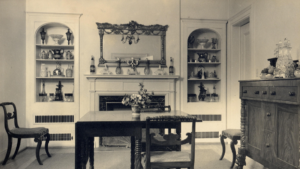
Beyond the Bottle Room is a room long nick-named as the Sunday Night Supper Room. Guides routinely inform visitors that it received that name from the Bellingraths who often had a simple supper here on Sunday nights after their weekend company had departed. A small table is set with two place settings to reaffirm this tale.

Mrs. Bellingrath’s nephew, Ernest Edgar, Jr. disagreed. He recalled a larger table and said that the room was used during the winter months when they could not use the screened-in Dining Porch.  After Mrs. Bellingrath’s 1943 death, her friend Sara Curran, an antiques dealer, was called upon to create an inventory completed in 1947.

Mrs. Curran’s entry for this room is under the title “Winter Breakfast or Dining Room.”  She places the large table now on the Dining Porch in this room, noting that with all the leaves in place it could seat 22 people. She had actually sold it to Mrs. Bellingrath so was quite familiar with it. On the “Summer Dining Porch” she listed a “Victorian dining table.” At some point after 1947 the two tables were swapped.

A photograph of the room taken around 1936 reveals yet another, much smaller table in this room.  Apparently Mrs. Bellingrath had not yet purchased the large table. Another startling fact is that the room was painted a light cream color.

By 1964 when Margaret Taylor Moore compiled her book, the room was called “The Small Dining Room, sometimes called the Sunday Night Supper Room.” She offers no reason for the nickname and describes the room as being painted “a dark, leaf green.”

When the Home opened to the public in 1956 the tours entered this room by way of the glass door leading to the porch. The “Victorian dining table” was deemed an obstruction and was moved to the basement and later sold to a member of the garden staff. Guests could now easily pass by the diminutive table set for two and head into the Bottle Room.

As the Home approaches its 90th year this room has had its current color scheme for nearly seventy. This year the peach colored carpet which had begun to dry rot was replaced by a handsome Oriental rug with colors that complements its surroundings. And, visitors no longer have to go outside to view this intimate dining room.

Visit and Connect with Us

Gulf Coast Chinese Lantern Festival – A Smash Hit!

Well, here we are, seven weeks out of nine total into the inaugural season of the Gulf Coast Chinese Lantern Festival! Two more weeks are left, and as such we are in the final stretch. It’s hard to believe that I was writing a column announcing this new festival just a short three months ago! What a season it has been, and what a season it will continue to be for the remaining weekends. We cannot thank you, our patrons and visitors, enough for making this new festival such a success.

Back last December when we debated whether we should jump in the swimming pool, so to speak, and launch this festival, there was a lot of uncertainty. 1) We would have to commit somewhere around $130,000 in funds to host and hold the event – which means we stood to lose big if the event failed. 2) Staff would have to commit time and energy to yet another evening event when we hadn’t even finished up the 2024/25 epic, record-breaking Magic Christmas in Lights season. 3) Even though WE thought it was a great concept, would guests and visitors feel the same way, and would they turn up? 4) On the other hand, would too many people show up and overwhelm us?! Six staff at the “director” level and a few at the “manager” level met with me so that we could hash out the pros and the cons. We decided, unanimously, that now was the time to do this – “Damn the torpedoes,” so to speak, from a certain nearby historical landmark!

What do I feel we have accomplished, as a staff and an institution, in holding this new event? 1) We’ve come together to initiate something new and grand, the likes of which we haven’t done since 1995 when Magic Christmas in Lights was launched. 2) We’ve made gigantic strides in improving the quality of our offerings of meals, concessions, and beverages throughout the BGH campus. 3) We’ve greatly streamlined the check-in process, successfully integrating pre-paid ticketing into our daily operating procedures. 4) We pivoted extremely well in being able to close the Gardens an hour early, allowing us critical time to set-up and be ready for “opening” by 5:00 p.m. 5) Lastly, but most significantly, we have delighted tens of thousands of you, our patrons, with a high-quality show that has never before been seen in this region! Our positive reviews stand at 98%, and local partners such as Visit Mobile couldn’t be happier with what we have done.

So, …… where does this lead, you might ask?  Well, first off, it will lead to two more years of the Gulf Coast Chinese Lantern Festival, because we signed a three-year contract with Tianyu Arts and Culture! Secondly, it will lead to even better shows in the future, because we will have an entire year to plan the 2026 show instead of only three months to plan this year’s show. Lastly, it will allow what so many of you are already saying, the chance to develop a new family tradition at Bellingrath Gardens & Home!

Thank you, all, for your tireless support and appreciation of Bellingrath. We exist to fulfill the mission of serving as a permanent and fitting memorial to Mrs. Bessie Bellingrath’s artistry and genius, and we’d like to think that she, and Mr. Bell, are smiling down upon us right now.

Click here to purchase tickets.

Visit and Connect with Us

Snow, Moon, and Flowers: Bellingrath on the Camellia Trail in Japan

Exploring Japan’s Camellia Culture: From Shizuoka to Oshima Island

As promised in last month’s article, our journey through Japan continues—this time taking us from the structured elegance of mainland gardens to the wind-swept island of Oshima. Here, the Camellia’s story deepens, rooted not only in cultivation but in centuries of culture, geography, and tradition. From wild species to the caldera of a dormant volcano, this leg of the International Camellia Society’s Congress offered some of the most intimate encounters yet with this remarkable genus.

The International Camellia Society (ICS), a nonprofit dedicated to the cultivation and preservation of Camellias, holds a Congress biennially in a host country. In March 2025, Japan welcomed us. Representing Bellingrath Gardens and Home—where Camellias are a core collection—it felt essential to visit the birthplace of ornamental Camellia breeding and connect with fellow enthusiasts.

Shizuoka Prefecture

Our journey began in Shizuoka, where we visited the late Mr. Shoji Himuro’s Camellia Garden. Despite spanning just over half an acre, the garden grows more than 1,200 Camellias. Familiar varieties like ‘Peter Pan’ and ‘Sundial’ entranced me, as well as unique Japanese cultivars like ‘Himuro Setsugekka.’ Named after the Japanese aesthetic theme setsugekka—snow, moon, and flowers—this variety embodies the ephemeral beauty of nature.

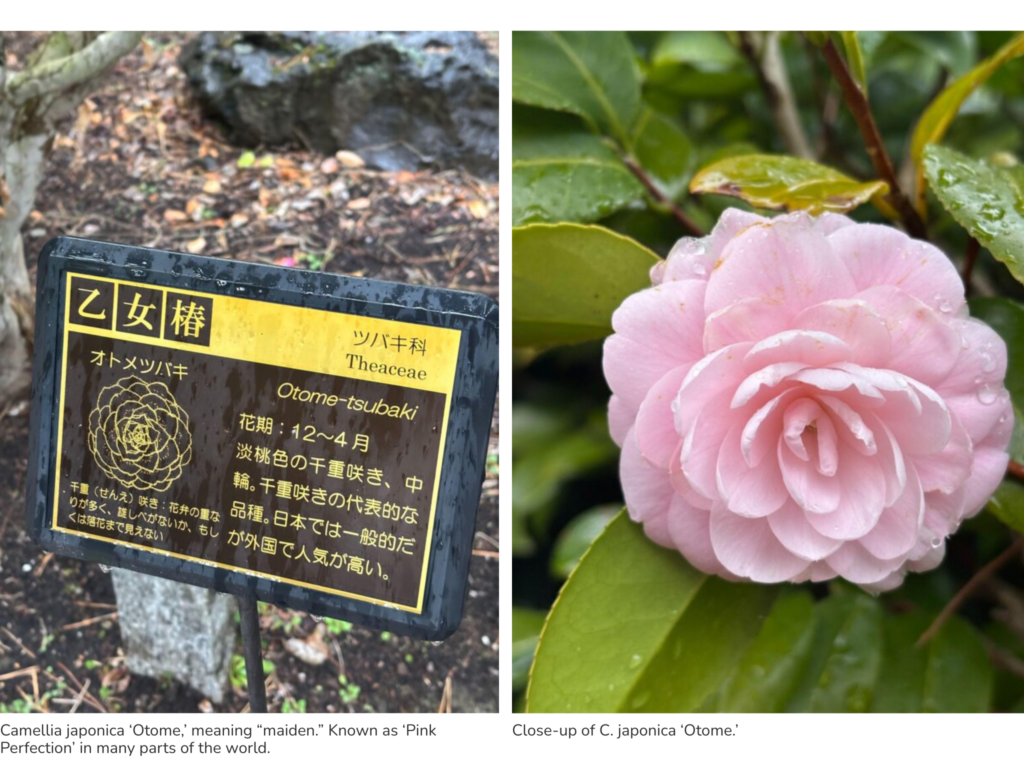
Next, we visited the Komuroyama Camellia Garden, where informative signage highlighted each plant’s flower form, bloom time, and origin. Of particular note was ‘Otome’ —also known as ‘Pink Perfection’ —planted widely as a street tree in Japan. It’s also the Camellia that adorns the Bellingrath logo.

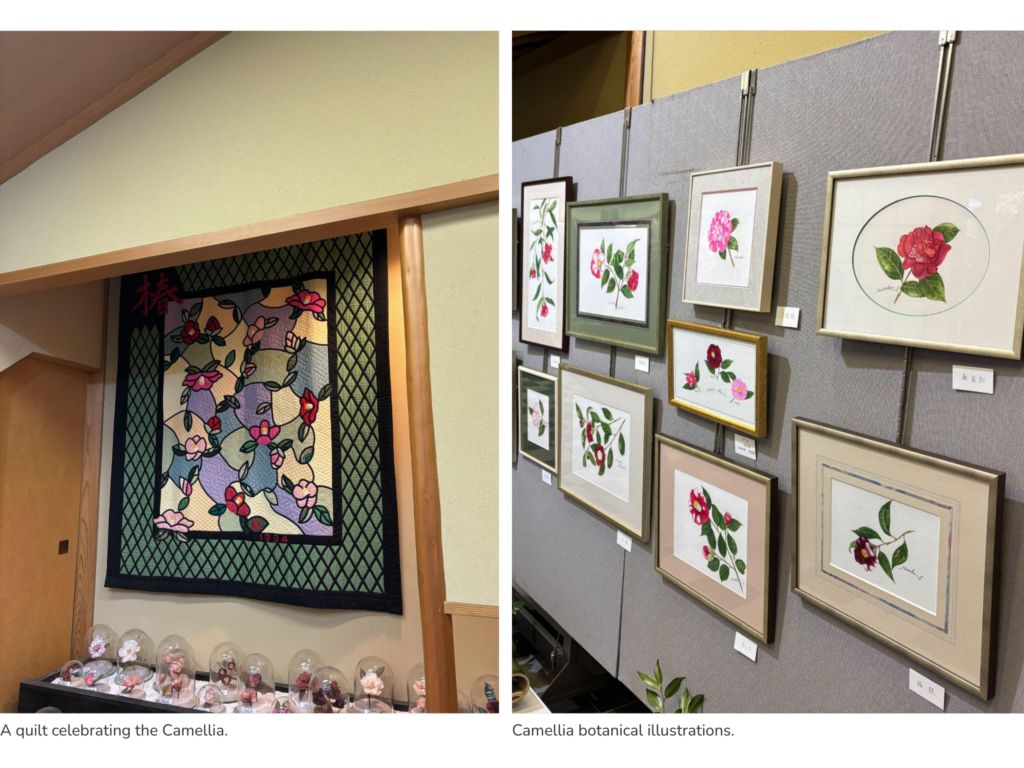
Furthermore, this garden also featured a Camellia-themed art museum. Quilts, woodblock prints, and paintings adorned the walls in a modern take on the traditional Japanese aesthetic.

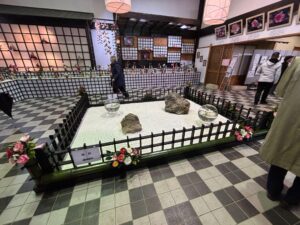
Interior of the Camellia museum at Komuroyama Camellia Garden.
Oshima Island: A Camellia Sanctuary

After a restful night, we took a ferry to Oshima Island, home to three of Japan’s eight “Gardens of Excellence” and Mt. Mihara, an active volcano. The volcanic ash creates ideal soil for Camellias—nutrient-rich and well-draining. In fact, over three million wild Camellia japonica grow on the island!

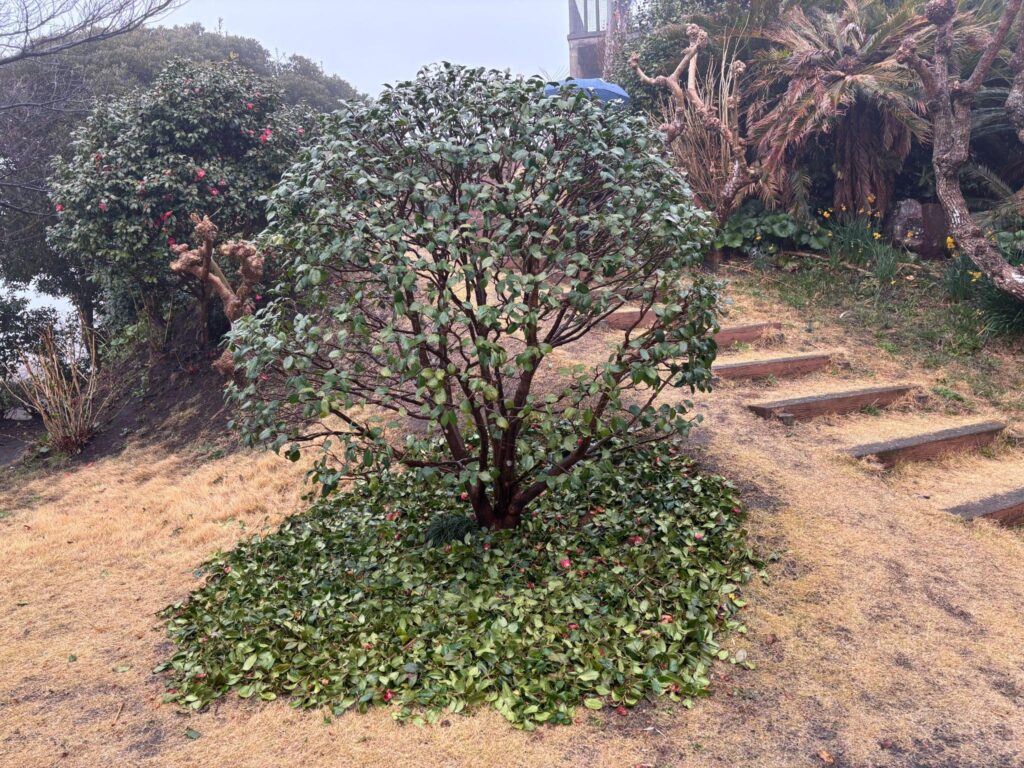
We first stopped at Mr. Takashi Yamashita’s Tsubaki-Hana Garden. He prunes post-bloom to promote air circulation and larger flowers. While there, ICS President Mr. Gianmario Motta shared an Italian Camellia pruning tip: “A bird should be able to flit through the canopy”—a bit more poetic than the version I’d heard, involving a cat!

An open canopy of Camellia. Perfect for a bird or cat to pass through.


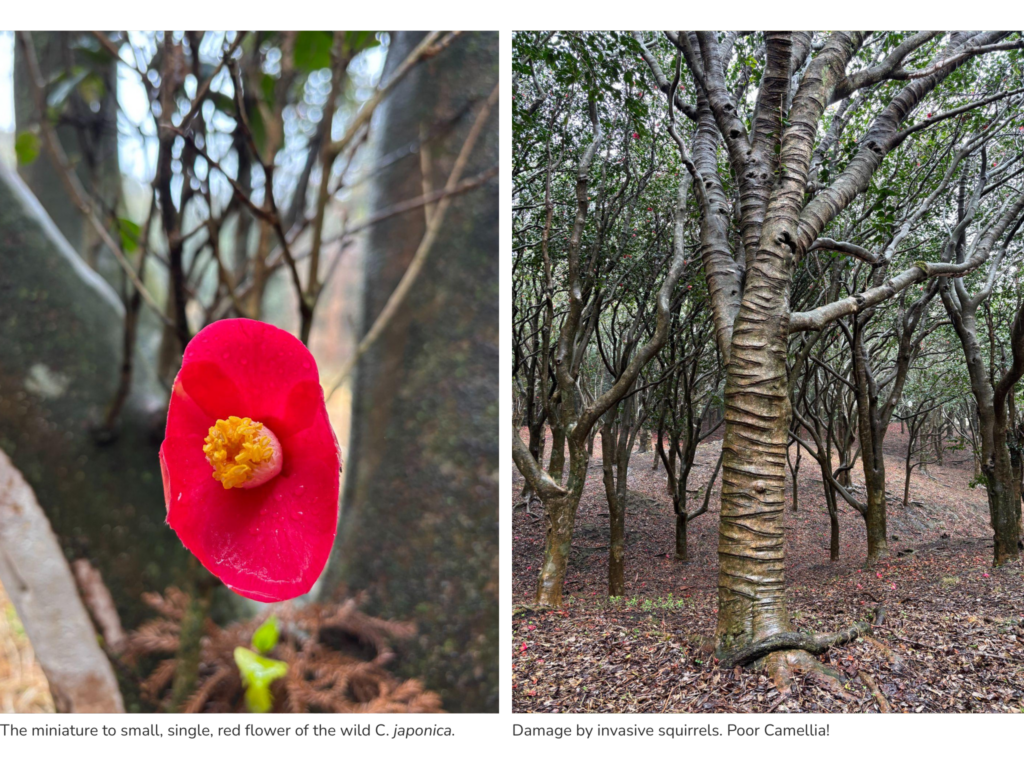
We then visited a wild C. japonica forest—an awe-inspiring sight. Standing before the wild C. japonica, I felt a deep sense of wonder at how centuries of human care and creativity shaped this simple flower into thousands of stunning, diverse forms. Yet just as human hands have shaped the Camellia’s beauty, they are now needed to protect its origins: this forest faces ongoing threats from Pallas’s squirrel, an invasive species that strips bark and weakens trees. Thankfully, efforts to control the population have shown promising results.

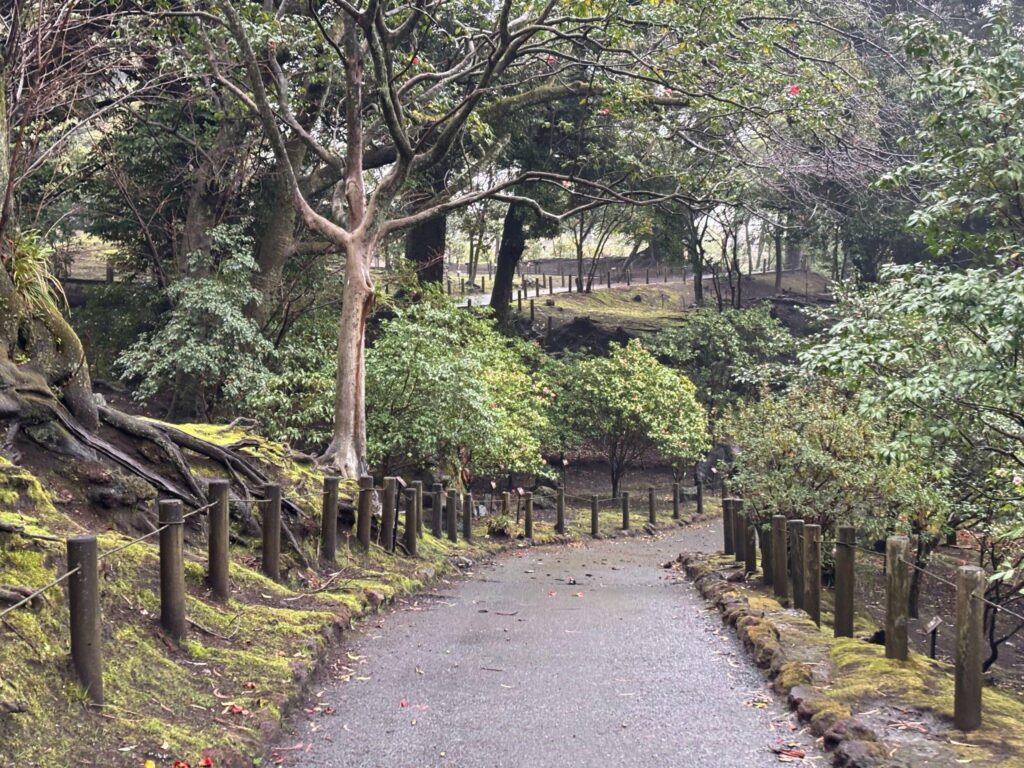
Our next stop was Tokyo Metropolitan Oshima Park, one of my favorite gardens. It was beautifully organized by hybrid origin, species, and even Camellias used in tea ceremonies. Yet despite the structure, the winding paths kept the experience full of surprise.

Tranquil pathway of the Tokyo Metropolitan Oshima Park.
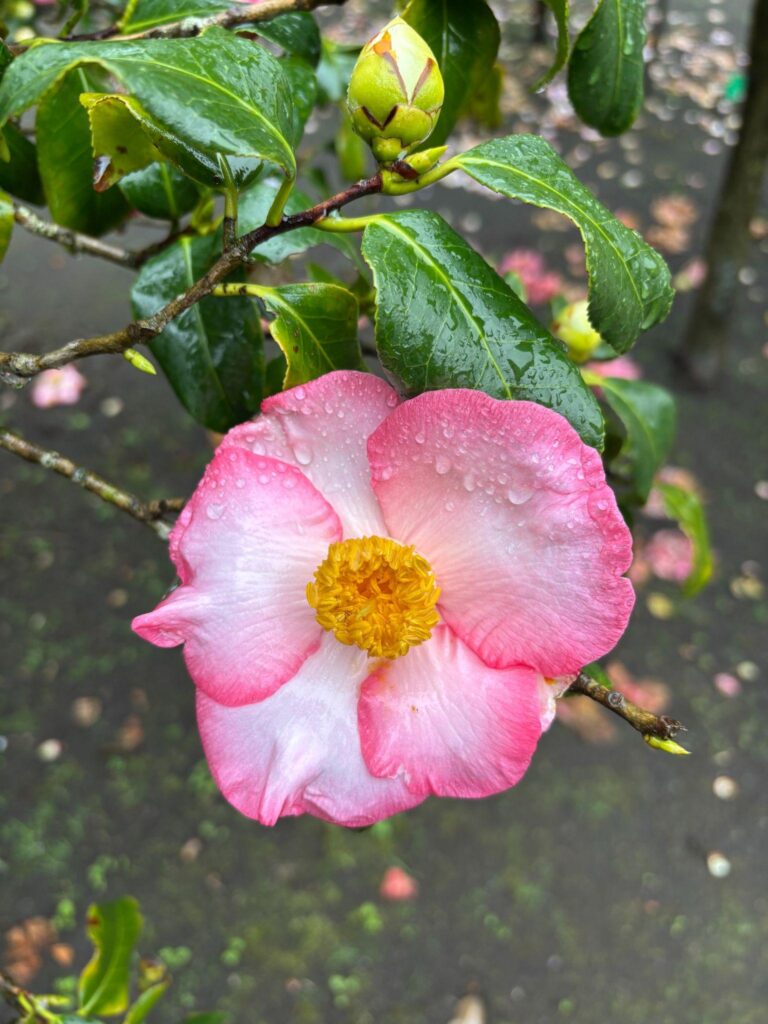
C. japonica ‘Jurako.’ Translation: “To collect everlasting pleasures.”


The day ended with a Japanese opera adaptation of The Lady of the Camellias (La Traviata)—a perfect cultural capstone.

Nurturing the Next Generation

The next morning, we visited Oshima Island High School—another Garden of Excellence. Here, students grow up immersed in Camellia culture, not just for beauty but also for practical uses like windbreaks and oil. Their collection of over 300 Camellias impressed me, especially one special cultivar: ‘Toki-no-hagasane’ (“folded feathers of Japanese ibis”), known outside Japan as ‘Bessie M. Bellingrath.’

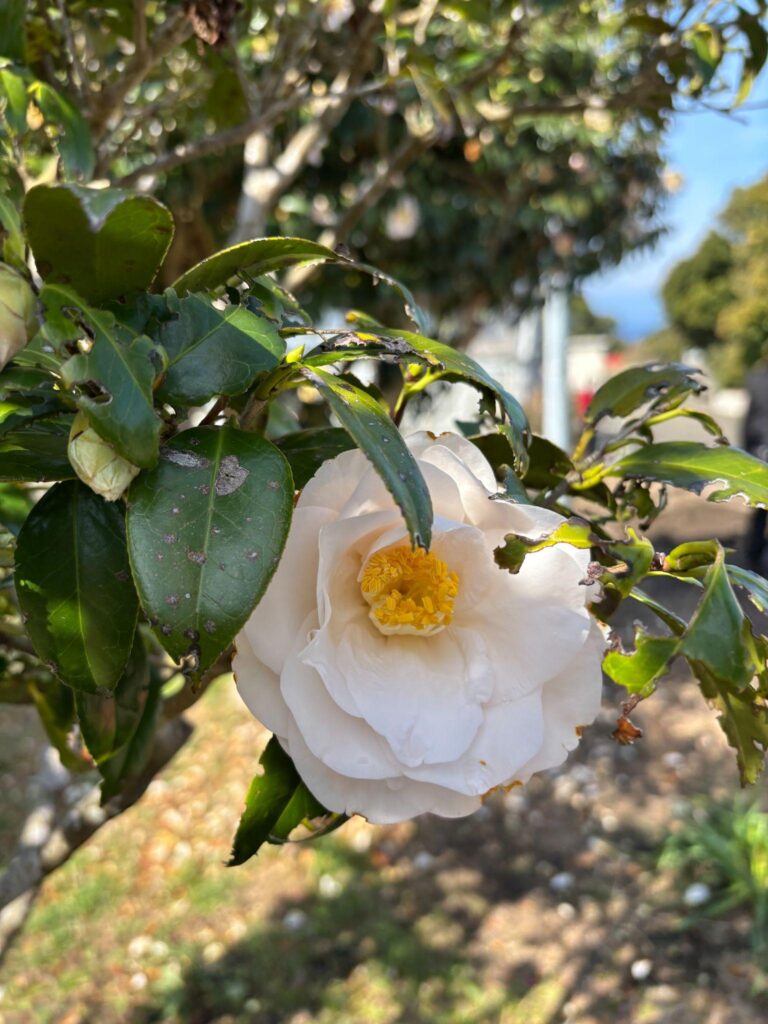
Timeless elegance of C. japonica ‘Toki-no-hagasane.’


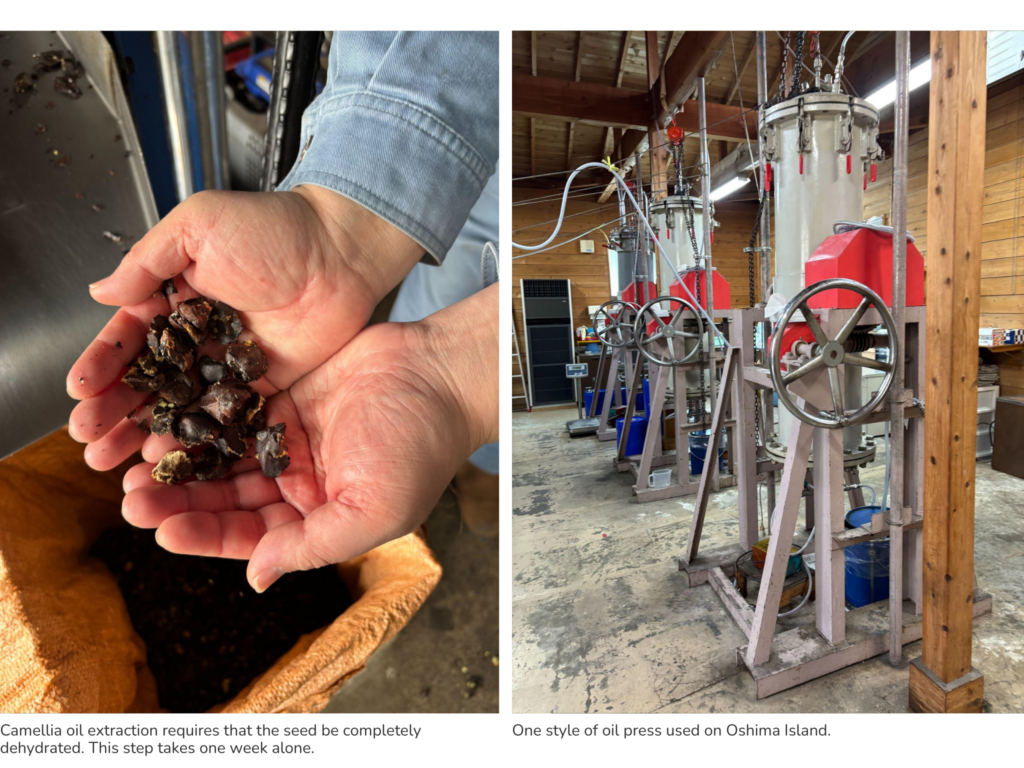
We ended our time on Oshima with a visit to Camellia oil refineries. Though the oil’s production is labor-intensive and yields are low, it remains a treasured commodity for both cosmetic and culinary uses, holding a cherished place in the island’s heritage.

Final Reflections

After this incredible journey through Shizuoka and Oshima, the main Congress concluded. Parting ways with newfound friends and fellow Camellia lovers was bittersweet. Despite language and cultural differences, our shared passion united us. I look forward to staying in touch with many of them.

Stay tuned for the next month’s installment, where I share the Camellia treasures of Osaka and the ancient temples of Kyoto.

And mark your calendars: Bellingrath Gardens and Home will be a featured stop during the 2027 International Camellia Society’s pre-Congress. We’d love to welcome you there!


Visit and Connect with Us